Business recycling in Mexico City: options and requirements
Recycling in Mexico City means meeting local rules and solving tough logistics. Here are your options, the requirements to check and how to choose a provider for your offices or sites.
By Zikloa TeamPublished 5 min read
Key takeaway: Business recycling in Mexico City combines two challenges: complying with both local and federal environmental rules, and solving logistics made difficult by traffic, driving restrictions and tight spaces. The keys are separating at the source, choosing a provider who knows the city and documenting every load that leaves your site.
Business recycling in Mexico City looks nothing like recycling at a suburban industrial park with a spacious yard. Corporate towers, shopping centers, hotels, restaurants, hospitals, workshops and industrial buildings often share the same borough. Each generates different materials, has different space constraints and faces different access rules.
If your company runs a regional headquarters in Santa Fe or Reforma, a distribution center in the northern part of the metro area or a light manufacturing site inside the city, this guide will help you map your options, understand the requirements and solve the logistics, which is usually the hardest part.
What recyclables Mexico City businesses generate
Your type of business determines which materials you will have and your main challenge:
| Business type | Common recyclables | Main challenge |
|---|---|---|
| Offices and corporate HQs | Paper, archived files, cardboard, PET, cans, electronics | Confidentiality and storage space |
| Retail and shopping centers | Cardboard, stretch film, pallets, polyethylene bags | High volume with shared loading docks |
| Hotels and restaurants | Cardboard, PET, aluminum cans | Getting front-line staff to separate |
| Industrial buildings and workshops | Metal scrap, plastic scrap, cardboard, pallets | Truck access and time windows |
| Distribution centers | Cardboard, stretch film, wood and plastic pallets | A constant flow that cannot stop |
Recycling options for businesses in the city
In practice, a company in the capital has four routes, which can be combined:
- Public sanitation service. Useful for household-type waste in small volumes, but not designed for industrial material, and it does not provide the documentation most corporate teams require.
- Drop-off centers and local recyclers. They may buy specific materials, but they do not always collect on site or issue formal receipts.
- Single-material collectors. A good fit if you generate one major stream, such as cardboard or paper.
- A comprehensive recycling provider. Collects multiple materials, handles documentation and gives you a single point of contact. This usually suits companies with several streams or several sites; see how comprehensive recycling for businesses works.
Environmental requirements to review
Waste regulation in Mexico is split between levels of government: hazardous waste is federal (SEMARNAT and PROFEPA), special handling waste falls to the states and municipal solid waste is handled locally. In the capital, the city's Ministry of the Environment (SEDEMA) is the main reference for many procedures.
Points worth reviewing:
- Separation. Mexico City has its own solid waste separation rules, which also apply to commercial and service establishments.
- Management plan. Depending on your volume and waste type, the authority may require a registered waste management plan. Our guide to waste management plans in Mexico explains how they work.
- Authorized providers. Check that your collector holds the authorizations required for the type of waste they handle.
- Hazardous waste. Lamps, batteries, oils or containers with chemical residue need separate handling, an authorized carrier and a manifest.
- Sites outside the city. If you have warehouses or plants in the State of Mexico, that state's environmental rules apply there, not Mexico City's.
This information is for orientation only. Validate your case with SEDEMA, your borough or a local environmental consultant.
Logistics challenges in Mexico City
Logistics is where the city differs most from other markets. Factor in the following when designing your program:
- Traffic. Early-morning or off-peak service windows tend to be the most reliable.
- Driving restrictions. Programs such as Hoy No Circula, air quality contingencies and time or route restrictions for cargo vehicles in some areas can force rescheduling.
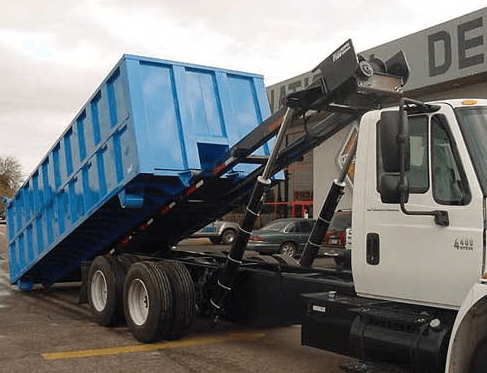
- Limited space. In corporate buildings with shared docks or low-clearance basements, a roll-off container may not fit. Alternatives include cages, smaller bins, cardboard compaction and more frequent pickups.
- Building rules. Property management usually sets dock hours, vendor registration and insurance requirements.
- The wider metro area. Many industrial buildings and distribution centers sit in corridors in the north of the valley, such as Vallejo in Azcapotzalco, or in State of Mexico municipalities like Tlalnepantla, Naucalpan or Cuautitlán. Distances and access conditions vary widely from site to site.
Confidential information and branded product
For many corporate offices in the capital, recycling is also a security issue. Paper containing personal data, contracts or financial information should never leave as ordinary cardboard; it needs a confidential document destruction process with a certificate. This also supports compliance with Mexican data protection rules and with your company's global information security policy.
The same applies to electronic equipment that stores data and to rejected or expired branded product, which should not end up resold. Ask your provider to explain how that material is destroyed or processed and to document it.
How to launch a recycling program in your building
If you are starting from scratch, this sequence tends to work well for offices, retail spaces and industrial buildings in the city:
- Run a quick inventory of materials by area: offices, cafeteria, warehouse, maintenance and dock.
- Set up separation stations with clear signage, plus a storage room or cage where each material is consolidated.
- Agree with property management on pickup times, the internal route and the handoff point to the truck.
- Choose a provider and frequency based on actual volumes from the first few weeks.
- Train cleaning and front-line staff, since they are the ones who ultimately separate or mix materials. Bilingual signage helps if your workforce includes expatriate staff.
- Measure monthly the kilograms per material and share results with each area to keep discipline up.
Questions to ask a recycling provider in Mexico City
Use this list to compare options:
- Which materials do you accept, and which not?
- What equipment do you collect with, and how do you adapt to tight spaces?
- How do you handle air quality contingencies and driving restrictions?
- How is material weighed, and what receipt do I get per service?
- Do you offer certified confidential destruction?
- Can you serve several sites, both in the city and in the wider metro area?
- What documentation do you provide for environmental or sustainability reporting to headquarters?
How Zikloa can help in Mexico City
Zikloa has offices in Mexico City (Guillermo González Camarena 1450, Santa Fe, Álvaro Obregón). We recycle plastics, cardboard, paper including confidential document destruction, aluminum, cans, copper and ferrous scrap, and we weigh on certified scales.
Check our coverage in Mexico City and tell us what materials your company generates so we can design a setup that works for your building or site.
- #business recycling
- #mexico city
- #waste collection
- #special handling waste
Frequently asked questions
Can the borough's public sanitation service collect my company's waste?
Public sanitation services are designed mainly for household-type waste in small volumes. If your company generates significant volumes or industrial materials, the usual route is a private provider; confirm with your borough (alcaldía) and the environmental authority what applies to you.
What recyclables does a corporate office in Mexico City generate?
Mostly paper and archived files, cardboard packaging, PET bottles and aluminum cans from cafeterias, and obsolete electronic equipment. Separating them at the source makes it easier for each one to reach the right recycling process.
How do air quality contingencies affect waste pickups?
During an environmental contingency, additional driving restrictions can apply, including to some cargo vehicles. Ask your provider how they reschedule service and keep enough storage capacity for one or two extra days.