Industrial waste management: a step-by-step guide
A seven-step roadmap for foreign and nearshoring plants in Mexico to organize their waste, comply with local rules and recover value from recyclables.
By Zikloa TeamPublished 5 min read
Key takeaway: Managing industrial waste in Mexico comes down to seven steps: inventory, classify, segregate, store, collect, recover and document. Map your corporate procedures to Mexico's three-tier waste classification, give every waste stream an owner, and keep a paper trail for each load that leaves the plant.
If your company recently set up or expanded operations in Mexico, waste is one of the areas where global policy and local practice don't line up automatically. Your corporate EHS manual may be built around another country's categories, while Mexican law assigns different types of waste to different levels of government. A structured approach to industrial waste management bridges that gap: every stream is measured, segregated and sent to the best available destination, with documentation that satisfies both local authorities and headquarters.
This guide walks through the process step by step, including what you should have in hand at the end of each stage.
What "integrated" waste management means in Mexico
Mexico's General Law for the Prevention and Integral Management of Waste (LGPGIR) makes the generator responsible for handling its waste properly and delivering it only to authorized providers. Hiring a contractor doesn't transfer that responsibility away; it means you need to choose the contractor carefully and keep evidence.
A sound program has three characteristics:
- A clear hierarchy. Prevent and reduce first, reuse second, recycle or recover third, and dispose of only what has no other outlet.
- Named owners. Each waste stream has a specific internal owner, not just "EHS."
- Traceability. You can show, on paper, what left the plant, how much and where it went.
For multinationals there's a fourth: alignment. Local procedures should satisfy Mexican rules and also feed the metrics your corporate sustainability team reports globally.
Step 1: Build a waste inventory
Walk the plant area by area: receiving, production, maintenance, warehouse, offices and cafeteria. For each one, list what waste is generated, roughly how much, how often and how it's handled today.
Hauler invoices are a starting point, but they usually show trips, not composition. For reliable numbers, run a formal weighing exercise over a representative period; our guide to running a waste audit covers the method. One detail that trips up teams reporting to a US headquarters: Mexico works in kilograms and metric tons, so agree on units before the first report goes out.
Step 2: Classify each stream under Mexican rules
Mexico divides waste into three categories, each with its own authority:
| Category | Typical plant examples | Main authority | Usual route |
|---|---|---|---|
| Hazardous | Used oil, solvents, contaminated rags, containers with chemical residue | Federal (SEMARNAT) | Authorized company, manifest and log |
| Special handling | Plastic scrap, cardboard, scrap metal, pallets, construction debris | State government | Recycling or disposal through an authorized provider |
| Municipal solid waste | Cafeteria waste, restroom waste, office sweepings | Municipality | Municipal service or authorized hauler |
Hazardous waste is identified using NOM-052-SEMARNAT-2005. For special handling waste, NOM-161-SEMARNAT-2011 sets classification criteria and determines which wastes require a management plan. The special handling category has no exact equivalent in many other countries, so it deserves extra attention; see our explainer on hazardous vs. special handling waste.
Classification also determines your generator category, which in turn drives your permits and reports.
Steps 3 and 4: Segregate at the source and store properly
Segregation
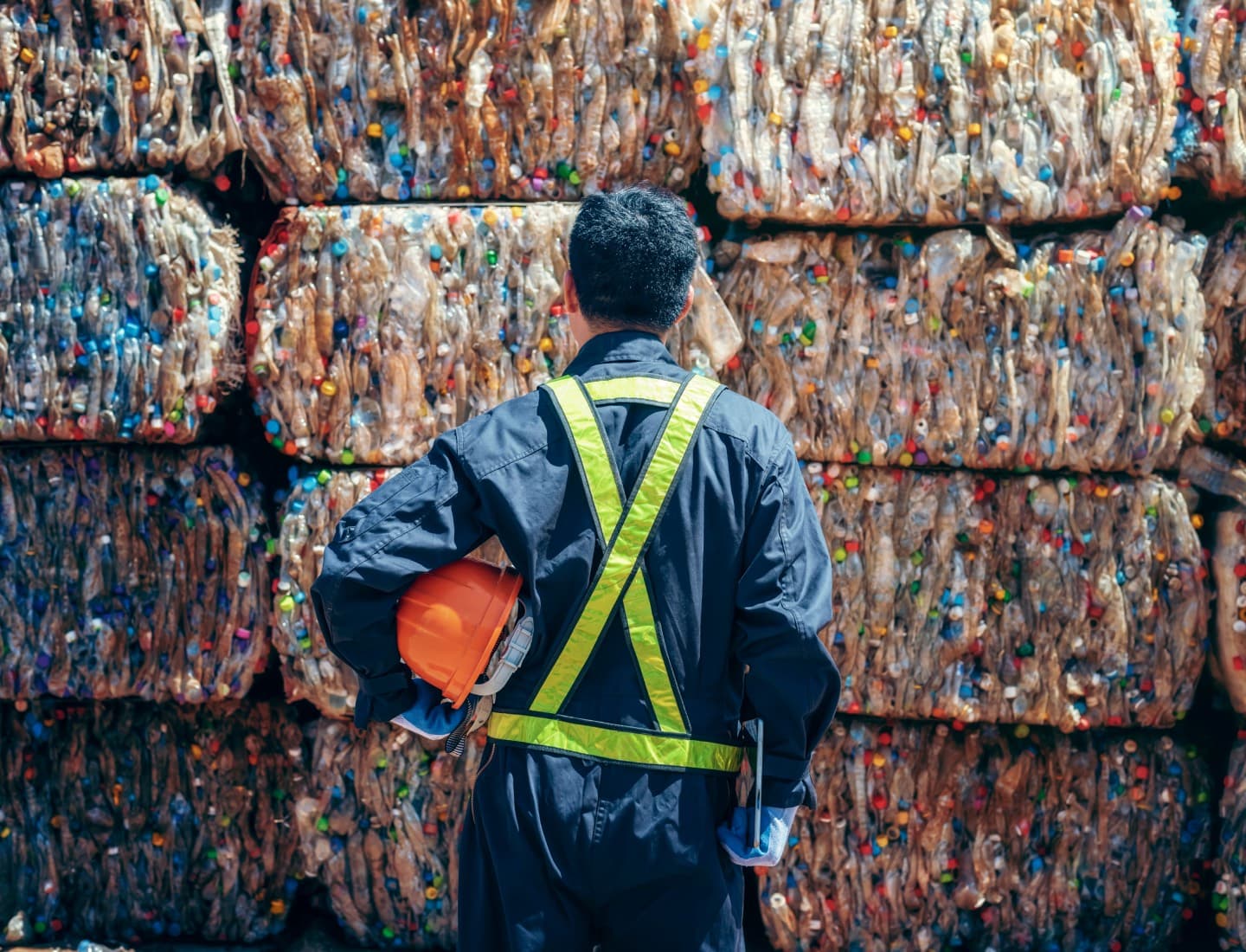
Mixing destroys value. Clean cardboard sells; the same cardboard with food or oil on it goes to landfill. Segregate where waste is generated, with one container per stream, clear signage (in Spanish first, bilingual if visitors or expatriate staff need it) and a single color code across the site. Start with the highest-volume or highest-value streams, usually cardboard, process plastics and metals.
Temporary storage
Each category needs its own staging area. Hazardous waste storage must meet specific conditions (impermeable floor, spill containment, ventilation, signage and restricted access), and regulation sets a maximum storage period. Recyclables need protection from rain and dirt, since moisture and contamination cut their price. A tidy storage area also lowers logistics costs: baled, labeled and accessible material loads faster.
Step 5: Set up collection and transport
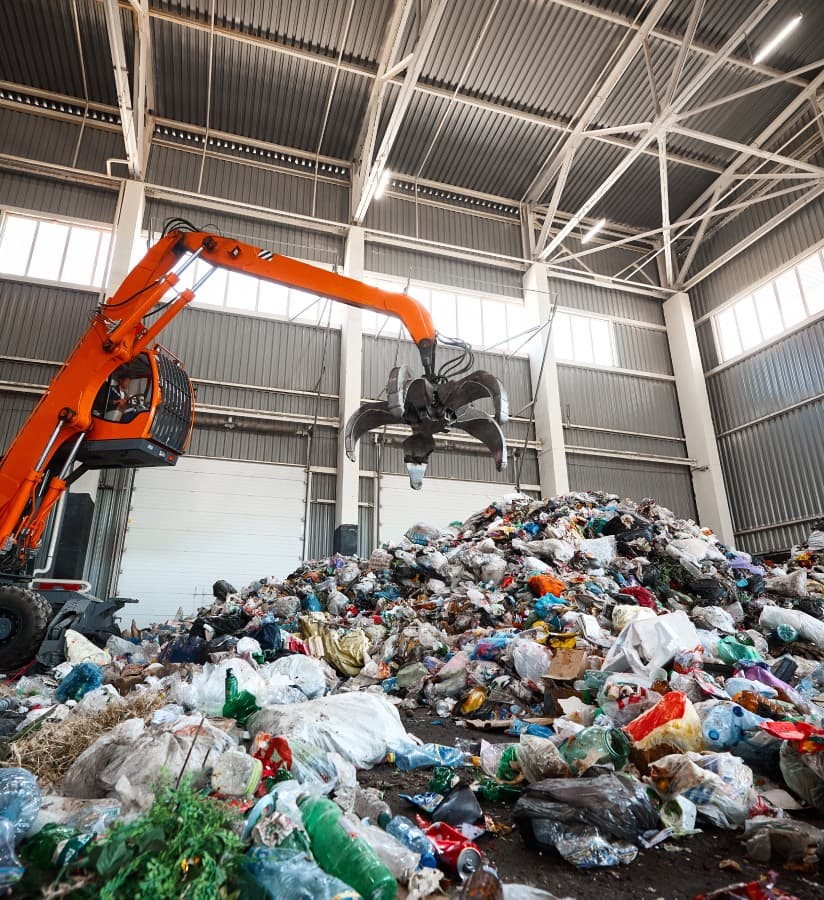
Match equipment to volume. Roll-off containers swapped full-for-empty keep material from piling up on site; a grapple crane loads heavy scrap or bulk material straight from the yard without manual handling.
Before signing with any provider, confirm three things:
- The carrier and the receiving facility hold the authorization required for that waste type.
- Every load is weighed on a certified scale and comes with a ticket.
- Pickup frequency is agreed in writing.
Step 6: Recover value before disposal
Recovery means putting waste back to use: selling it as raw material, reprocessing it or reusing it. Run each stream through four filters:
- Can it be reduced at the process or purchasing level?
- Can it be reused on site, as with pallets, totes or packaging?
- Is there a market for it as a recyclable?
- Can processing add value, such as baling, grinding, drying or sorting by type?
Only what fails all four should go to landfill or another authorized disposal route. In most manufacturing plants, a significant share of the volume sits in streams that can be recovered.
One Mexico-specific point for foreign-owned plants: if you operate under the IMMEX program, scrap derived from temporarily imported materials can carry customs obligations. Check with your customs broker before selling it in the domestic market.
Step 7: Document, measure and improve
Keep, for every shipment: waste type, weight, date, carrier, destination and, where applicable, the manifest or recycling certificate. Depending on your volumes and waste types, you may need a waste management plan, generation logs, or an annual filing through the COA (Cédula de Operación Anual).
Track a short set of metrics every month:
- Tons generated by stream and by area.
- Landfill diversion rate.
- Net cost of waste management: what you pay minus recyclable revenue.
- Contamination findings in containers.
Exact obligations depend on your generator category and the state where you operate. Validate them with the environmental authority or a local environmental consultant before finalizing your procedure.
How Zikloa can help
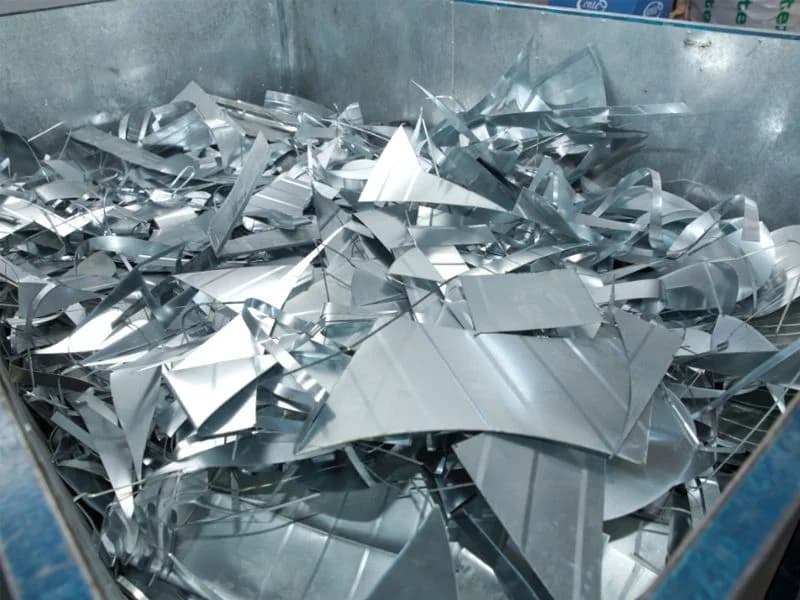
Zikloa supports companies in Nuevo León and Mexico City with the operational side of this process: roll-off containers of 15, 20 and 30 m³, grapple crane service for bulk material, certified weighing, and purchase of the recyclables you segregate, including plastics, cardboard, paper, aluminum, copper and ferrous scrap. With more than 15 years in the business, we can help you set up a comprehensive recycling program that fits both your plant and your corporate reporting.
To review your waste streams and find where the value is, contact our team.
- #waste management
- #industrial waste
- #mexico compliance
- #recycling
Frequently asked questions
Does Mexico classify industrial waste the same way as the US or Europe?
Not exactly. Mexico uses three categories (hazardous, special handling and municipal solid waste), each overseen by a different level of government. Map your corporate procedures to these categories instead of copying them from another country.
Are we still responsible for our waste after a contractor picks it up?
Hiring a contractor doesn't erase your responsibility as the generator. Under Mexican law you must choose authorized providers and be able to show where your waste went, so keep evidence of every shipment.
Where should a new plant in Mexico start?
With a waste inventory by area: what you generate, how much and how it's handled today. That baseline drives classification, generator category, provider selection and the data your headquarters will ask for.