PET recycling in Mexico: from bottle back to bottle
How PET travels from your facility in Mexico to a new bottle, what knocks it out of that loop, and what your team can do to keep it on track.
By Zikloa TeamPublished 5 min read
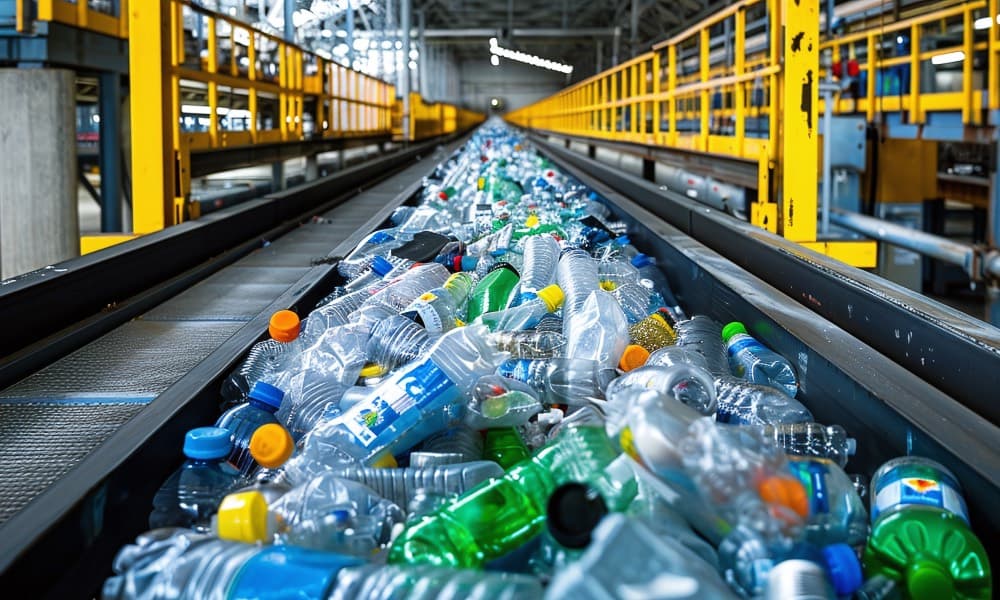
Key takeaway: PET is recycled by grinding it into flake, hot-washing it and separating caps and labels; to become a bottle again, its viscosity must be rebuilt and it must go through a validated decontamination step. Your job as a generator is to deliver PET that is empty, compacted and free of other plastics, especially PVC.
PET recycling in Mexico is the most mature plastic recycling loop in the country. There is an established network of collection centers and wash plants, plus bottle-to-bottle capacity that produces food-grade recycled resin. For a manufacturer that has recently moved production to Mexico, that is good news: PET from your site can feed a domestic closed loop, which is exactly the kind of outcome corporate sustainability teams want to report.
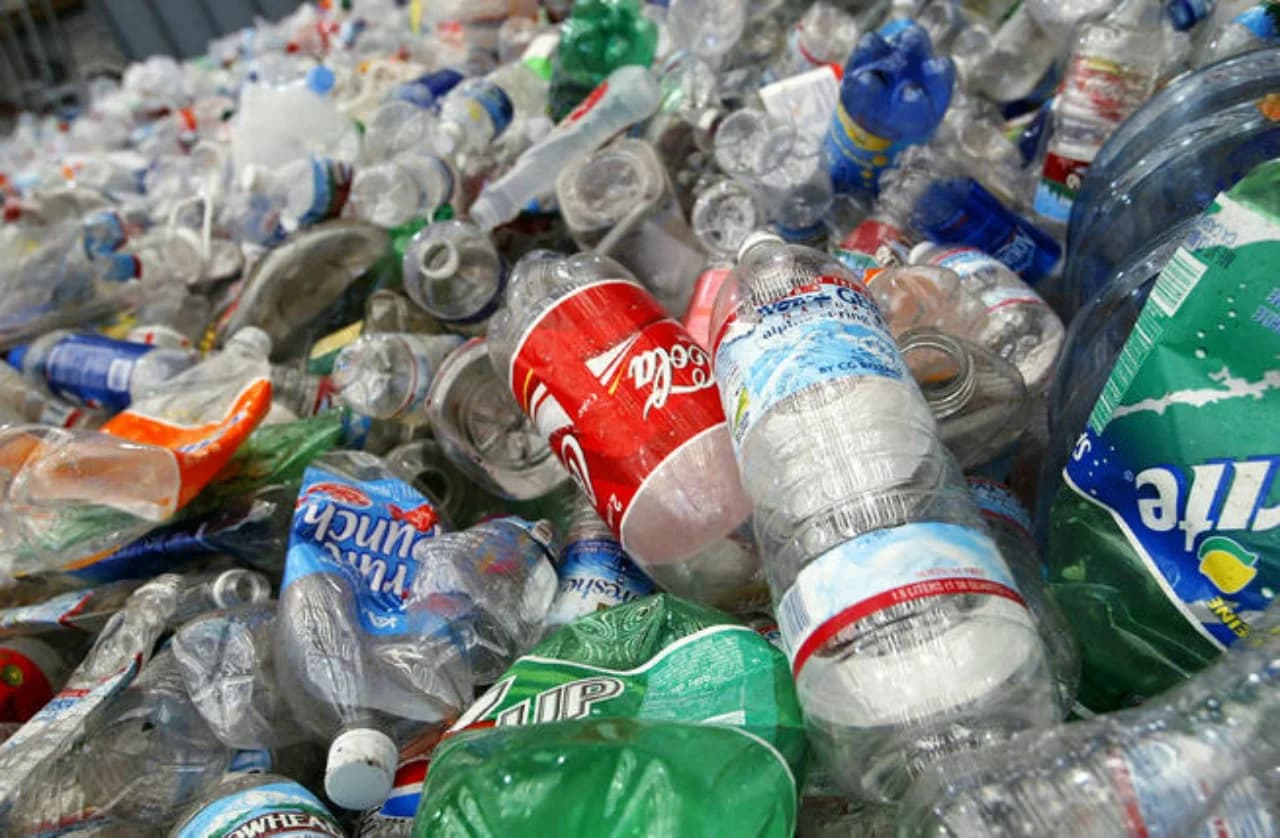
Not all PET reaches that destination, though. Some ends up in lower-value applications and some is lost to contamination. In an industrial setting, PET shows up in cafeterias and offices, in thermoformed trays protecting inbound components, as strapping and, at bottling plants, as rejected preforms and bottles. Knowing how it is processed helps you deliver material that keeps its full value.
Why PET recycles so well
PET is a thermoplastic polyester: it can be melted and molded again without changing its chemistry. Bottles are a single resin, mostly clear or in a few colors, and they are generated in large volumes, which justifies investment in specialized plants.
PET has one weakness that shapes its whole recycling process: it is hygroscopic. If it is melted while wet, its polymer chains break through hydrolysis and it loses intrinsic viscosity (IV), the measure of chain length and, in practice, of how strong the final product will be. That is why PET is dried thoroughly before every melt, and why extra steps are needed to rebuild IV, as described below.
From bin to flake: the process step by step
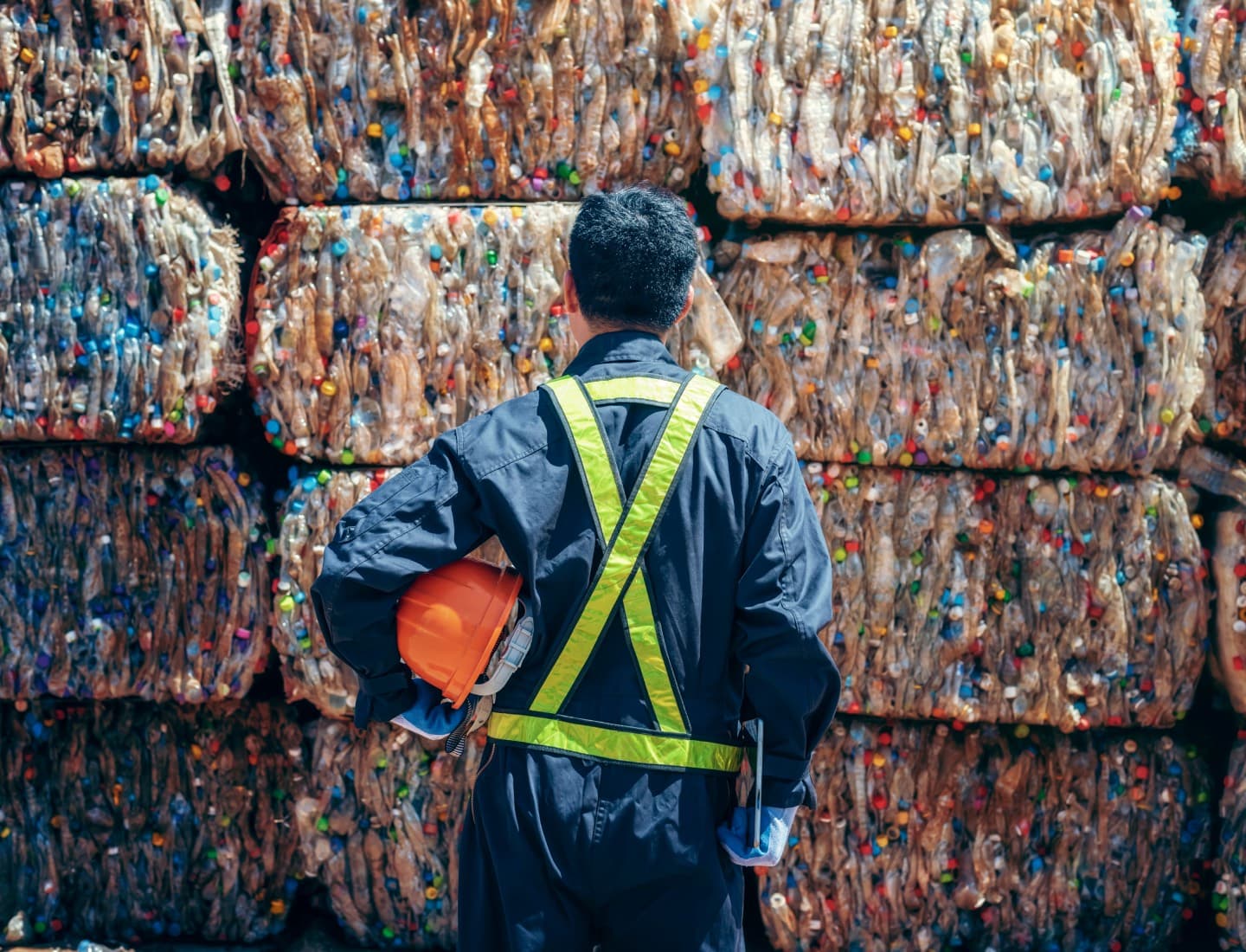
- Collection and baling. Bottles are compressed into bales for efficient transport.
- Debaling and presorting. Bales are opened and foreign material is removed. Near-infrared sensors and sorting staff pull out other plastics and split PET by color: clear, light blue, green and others.
- Label removal. Friction delabelers strip most labels before grinding.
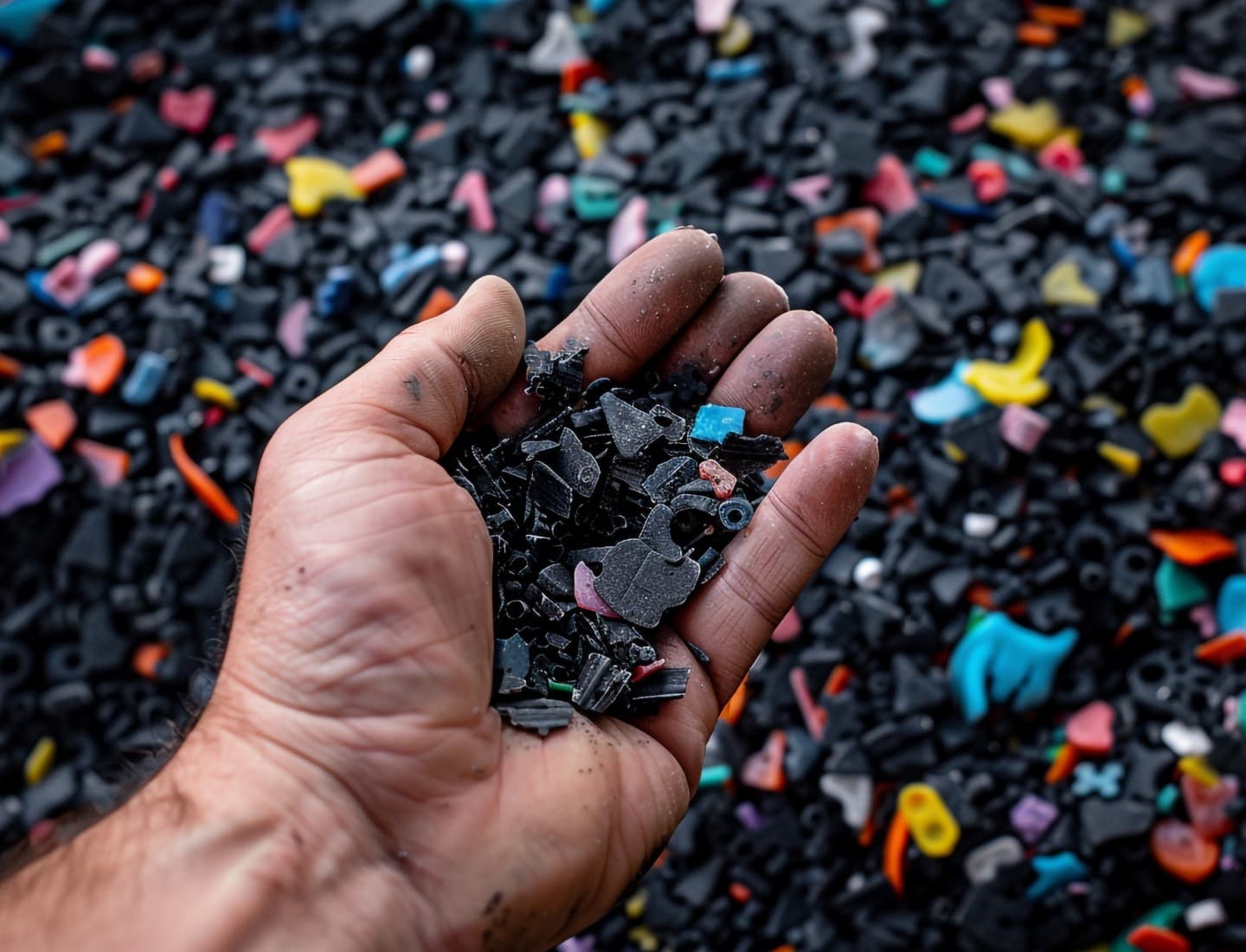
- Grinding. Bottles are reduced to flake roughly a centimeter across.
- Hot wash. Flake is washed with hot water, caustic soda and detergents to remove adhesives, beverage residue and dirt.
- Sink-float separation. In the tank, PET sinks while polypropylene or polyethylene caps and label fragments float.
- Rinse, drying and sorting. Air classifiers remove light fragments; metal detectors and optical flake sorters reject off-color or foreign particles.
The output is clean flake, which can be sold as raw material or moved on to pelletizing.
From flake back to bottle
The flake is melted in an extruder, filtered to remove solid particles and cut into pellets. Making bottles requires one more key step: solid-state polycondensation (SSP). The pellets are held for hours below their melting point, under vacuum or inert gas, so the chains grow again, IV rises to bottle-grade levels and volatile contaminants are driven off.
For recycled PET to touch food and beverages, the full process must prove through challenge testing that it removes contaminants, and it must hold the corresponding approvals. Global brands commonly ask for evidence such as US FDA letters of no objection, on top of their own specifications. If your company sources rPET packaging in Mexico, those are the documents to request.
| End use for recycled PET | Quality requirement | What it tolerates |
|---|---|---|
| Food and beverage bottles | Very high: high IV and validated decontamination | Almost no color or contaminants |
| Sheet and thermoformed trays | High | Slight color variation |
| Strapping | Medium-high: needs mechanical strength | Color; often produced in green |
| Textile and fill fiber | Medium | Lower IV and more color variation |
Contaminants that knock PET out of the loop
- PVC. Blister packs, shrink sleeves or PVC containers that slip into the bale. They degrade at PET processing temperatures and cause black specks and yellowing.
- PETG and PLA. They look like PET but behave differently: PETG does not crystallize and clumps in dryers; PLA melts at a much lower temperature and leaves defects.
- Liquids and residue. They add weight, odor and dirt the wash line must remove, and they are normally deducted.
- Metals. Aluminum seals, wire and staples that damage grinders.
- Opaque or barrier bottles. Some opacifiers and barrier layers reduce batch clarity and limit end uses.
- Full-body sleeves. They can keep sensors from recognizing the bottle and send it to rejects.
Preparing your site's PET
- Set up dedicated bottle bins in cafeterias and common areas, with a round, bottle-sized opening to keep trash out.
- Ask for bottles to be empty; rinsing is not necessary, but liquid is a problem.
- Do not worry about caps: they are separated during washing. If your buyer prefers otherwise, follow their instructions.
- Keep thermoformed trays and PET strapping in their own categories.
- Keep PVC blisters, PS cups and other packaging out.
- Compact: crushing bottles or baling them with a vertical baler cuts the number of trips.
- Store under a roof, on pallets, away from rain and dust.
- Record the weight of every shipment and ask for documentation of the destination; a well-prepared recycling certificate supports your environmental reporting.
If you run a bottling or packaging line, rejected preforms and bottles are a separate, higher-value stream: they are clean, unlabeled and of a known grade. Keep them away from post-consumer bottles from the cafeteria, ship them as post-industrial material and share the resin grade with your buyer.
Where PET fits in your sustainability reporting
Many global brands have public recycled-content commitments for packaging, and that keeps demand for clean PET steady. Every bottle your site sorts correctly enters that loop instead of taking up space in a landfill.
For your own metrics, what matters is reliable data: kilograms shipped per month, material type and a documented destination. That is what auditors and corporate ESG teams will ask for. If your site also handles other resins, our guide to types of recyclable plastic applies the same logic to them.
How Zikloa can help
Zikloa recycles PET along with other industrial plastics. We can collect it at your facility with 15, 20 or 30 m³ roll-off containers, weigh it on certified scales and advise you on how to sort and compact it so it keeps its value. Request a PET collection proposal with your approximate volume and site location.
- #pet
- #plastic recycling
- #bottle-to-bottle
- #circular economy
Frequently asked questions
Is colored PET worth as much as clear PET?
Usually not. Clear PET has more possible end uses, including new clear bottles, while green or amber PET is limited to applications where color does not matter, such as fiber or strapping. That is why the two should not be mixed.
What is the difference between bottle-grade and fiber-grade PET?
Mainly intrinsic viscosity and cleanliness. Bottle grade needs an IV in the range of 0.8 dl/g and a validated decontamination process; fiber works with lower values, around 0.6 dl/g, and tolerates more color variation.
Can our recycled PET count toward a corporate recycled-content goal?
PET your site sends for recycling counts as diverted waste, not as recycled content in your own products. To claim recycled content, you would need to buy recycled resin with documentation from the supplier. Many companies track both metrics separately.