Regrind, pellets and repro: how plastic gets processed
From scrap to pellet: how grinding, densifying and melt-filtered extrusion work, and when it makes sense to buy or sell each format.
By Zikloa TeamPublished 5 min read
Key takeaway: Regrind is plastic cut into particles; densified material is film or fiber compacted into granules; reprocessed pellets, often called repro, are material that has been remelted, filtered and cut. Each step adds uniformity and cost, so the right format depends on how demanding your process is.
The plastic regrind vs pellets decision comes up whenever scrap is turned back into raw material, whether you are buying recycled resin or selling your own plant's scrap. Terminology varies, and in Mexico it can be confusing for teams used to US terms. Locally, you will hear "molido" for regrind, while "repro" and "regranulado" usually mean reprocessed pellets. To make it trickier, granulators (the knife mills that make regrind) are sometimes called "granuladores", so "granulado" can mean either. When you write a purchase specification, describe the format explicitly rather than relying on the label.
Beyond names, what matters is what happens to the material at each step and what you can require from each format.
Three formats, three levels of processing
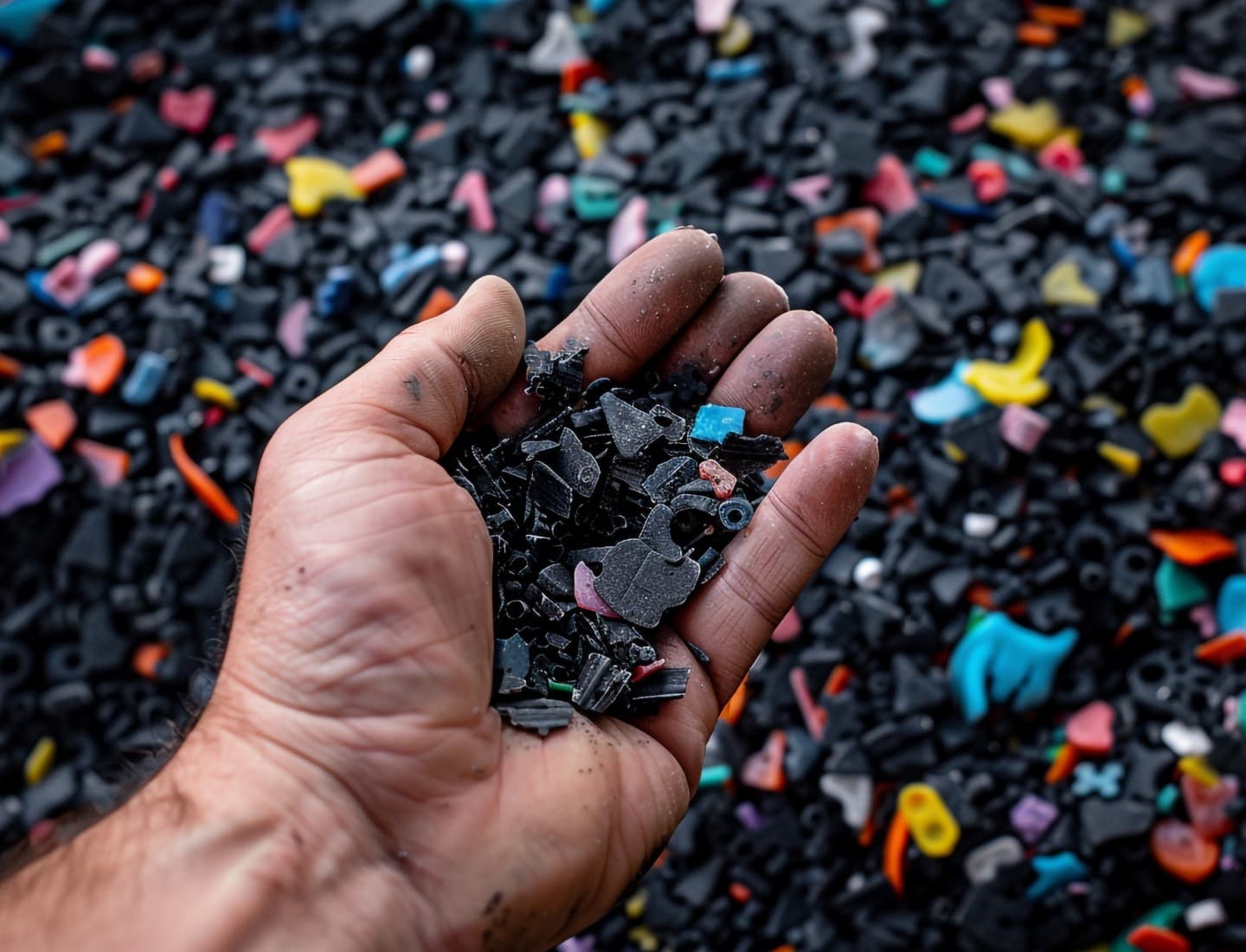
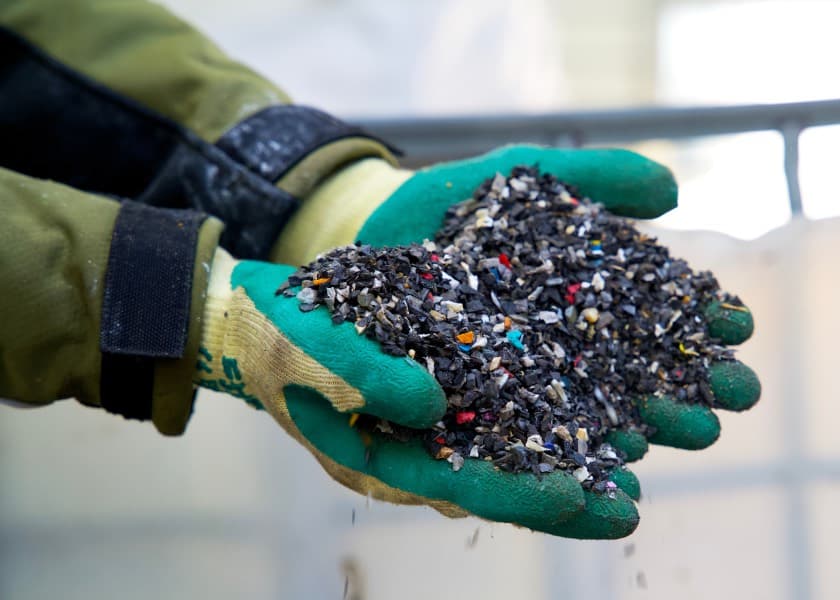
- Regrind: parts, runners or sheet cut into particles in a granulator. It is never melted, so it keeps whatever blend and contaminants the source material had.
- Densified material (agglomerate): film, fiber or foam compacted by friction and heat into irregular granules. It is an intermediate step for very light materials.
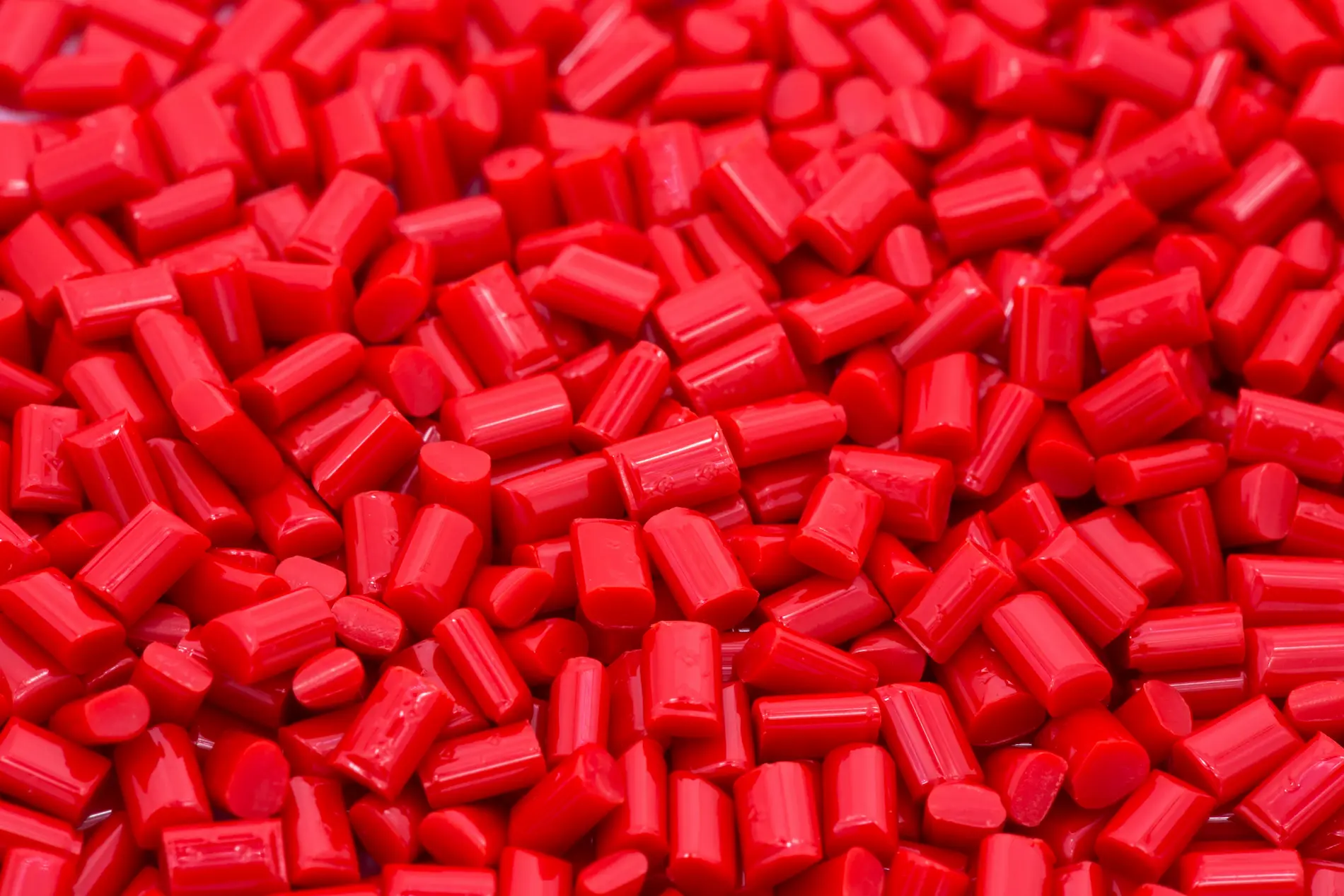
- Reprocessed pellets (repro): material melted in an extruder, devolatilized, filtered and cut into uniform pellets.
What makes good regrind
The core equipment is the granulator: a rotor with knives spins past stationary bed knives and cuts the material until it passes through a screen. Screen opening sets particle size, usually from a few millimeters to just over a centimeter. Purgings and very large parts typically go through a low-speed shredder first.
What separates quality regrind from problem regrind:
- Uniform size. Very irregular particles dose poorly and melt unevenly.
- Low fines. Dust melts before the rest, burns and creates black specks. It is removed with air classifiers or dedusting screens.
- Sharp knives. Dull knives heat the material and generate more fines.
- Clean changeovers. A granulator that is not cleaned between resins or colors contaminates the next lot.
- Metal detection upstream of the granulator, to protect both equipment and product.
Post-consumer or dirty material also needs washing and drying, before or after grinding.
One detail that often gets overlooked: regrind of hygroscopic resins such as nylon, PC, PET or ABS picks up moisture faster than pellets because of its larger surface area. Store it in closed containers and dry it before use, just as you would virgin resin.
Densifying: the intermediate step for film and fiber
Film, fiber and foam have such low bulk density that an extruder cannot feed them reliably. An agglomerator cuts and heats them by friction until they soften, then a water spray quenches them into granules. Many modern film recycling lines integrate a cutter-compactor directly at the extruder inlet and skip the separate step.
From regrind to pellet: reprocessing extrusion
- Feeding regrind or agglomerate, sometimes blended with additives.
- Melting in a single- or twin-screw extruder.
- Devolatilization through vacuum venting, which removes moisture, ink residue and volatiles.
- Melt filtration with screens or continuous screen changers; mesh fineness determines how clean the output is.
- Pelletizing: strand, underwater or die-face cutting with a water ring.
- Cooling, drying and blending in silos, so every shipment has consistent properties.
The pelletizing method is usually matched to the material. Strand pelletizing is common in compounding and for engineering resins; die-face cutting with a water ring is a frequent choice for polyolefin film recycling; underwater pelletizing suits high throughputs and gives very uniform pellets.
When stabilizers, pigments, impact modifiers or fillers are added during extrusion to correct properties, the process is called compounding, and it is usually done on twin-screw extruders.
Every melt adds heat history, and each resin reacts differently: PP tends to gain melt flow, while PET and nylon lose viscosity if they are not dried properly before melting.
Regrind vs. densified vs. pellets: comparison table
| Criterion | Regrind | Densified | Reprocessed pellets |
|---|---|---|---|
| Uniformity | Depends on source | Medium | High, melted and blended |
| Bulk density | Variable | Medium | High and consistent |
| Hopper feeding | May bridge | Acceptable | Uniform |
| Contaminant filtration | No | No | Yes |
| Processing cost | Low | Medium | Higher |
| Typical use | Blended with virgin in the original process | Film extrusion or feed for pelletizing | Partial or full replacement of virgin resin |
Which format should you buy?
Regrind works when you know its origin well, it comes from a single source and you blend it at a low ratio with virgin. If you need consistent properties, controlled color and precise dosing, or you make thin-wall parts, film or fiber, well-filtered reprocessed pellets are worth the difference. Either way, ask the supplier for:
- Particle size and fines content, for regrind.
- Bulk density, so you can adjust dosing.
- Melt flow and its lot-to-lot variation.
- Filter mesh used, for pellets.
- Moisture at shipment and packaging type.
If you blend regrind with virgin pellets, watch for segregation: particles of different size and density separate in the hopper, so the actual ratio entering the screw drifts. A gravimetric blender close to the throat and regrind sized near pellet size keep the blend stable.
Our guide to the recycled plastic technical data sheet explains how to interpret these values and what ranges to request.
What if you are the one selling scrap?
Grinding on site reduces volume, cuts freight and can raise value, but only if you keep categories separate and the granulator clean. If you cannot guarantee that, it is usually better to ship whole parts and let the processor grind them: contaminated regrind is worth less than the original parts.
Before buying a granulator, compare three things: monthly volume per category, the floor space and labor needed to run it cleanly, and the real difference your buyer pays between parts and regrind. If your plant is new to Mexico, also check whether the granulator falls under your corporate machine-guarding and noise standards, which can add cost. Our guide to injection and extrusion scrap explains how to segregate that material at the source.
How Zikloa can help
Zikloa offers material processing to turn industrial waste into raw material with market value. If you are not sure whether to sell your plastic as parts, regrind or another format, we review resin type, volume and cleanliness with you and recommend the most cost-effective option. Send us your plastic material details for a recommendation.
- #regrind
- #pelletizing
- #repro
- #extrusion
- #recycled raw materials
Frequently asked questions
How many times can a plastic be reprocessed?
There is no fixed number: it depends on the resin, its stabilizers and the conditions of each melt. Every pass degrades the material slightly, so in practice it is blended with virgin resin or restabilized to hold its properties.
Can we feed regrind straight into an injection molding machine?
Yes, it is common practice, especially when blended with virgin pellets. Make sure particle size is close to pellet size, fines are low and the material is dry if the resin requires it; very irregular particles cause dosing variation.
Why do reprocessed pellets cost more than regrind?
Because they go through an extra extrusion step, with melting, devolatilization, filtering and cutting, that uses energy and equipment. In return you get a more uniform, cleaner material that doses consistently, and that consistency is what you pay for.