Recycled polypropylene: applications and quality criteria
Which parts can be made with recycled PP, how to tell homopolymer from copolymer, and which tests to request from suppliers to avoid surprises in production.
By Zikloa TeamPublished 5 min read
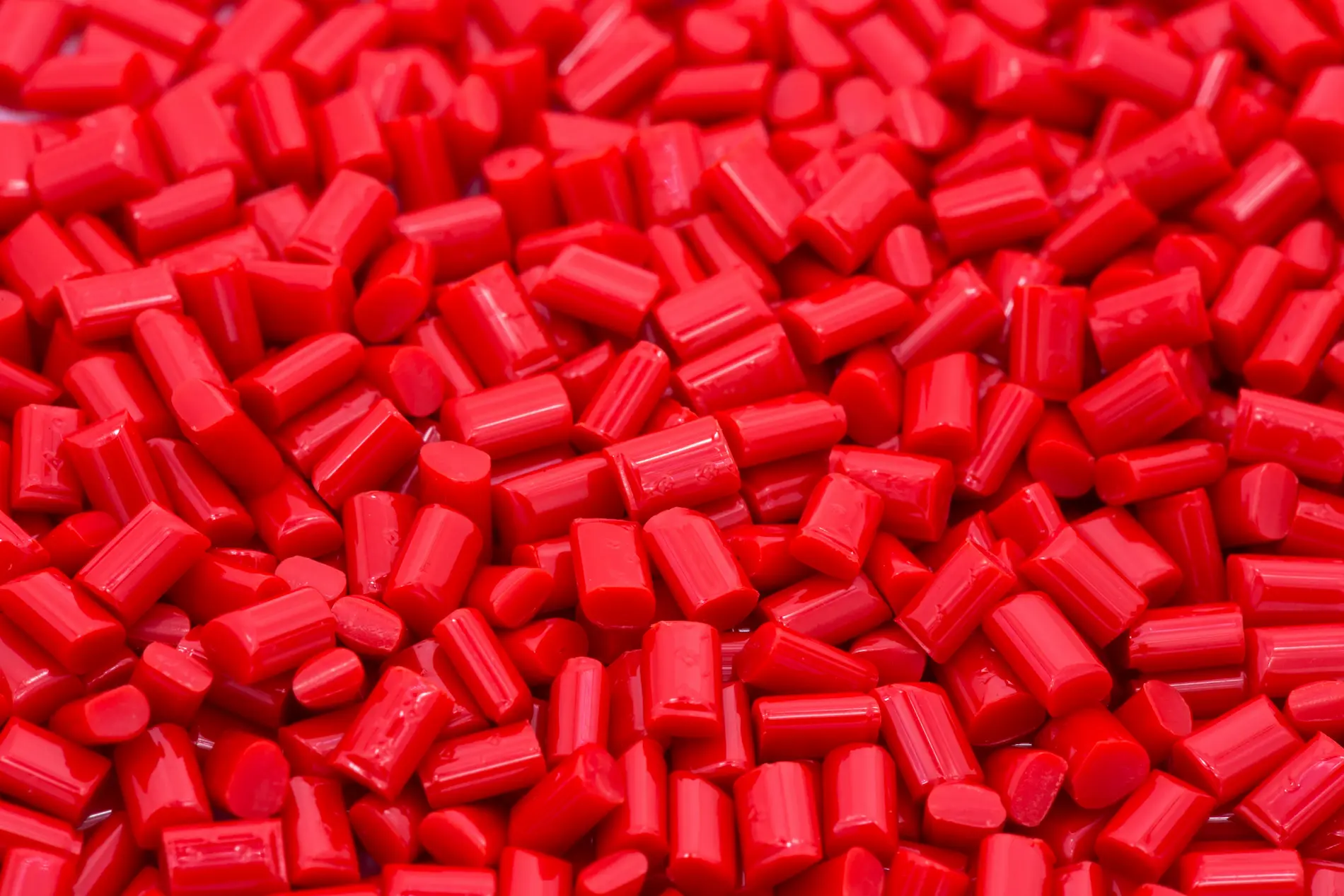
Key takeaway: Recycled polypropylene performs well in pallets, crates, buckets, non-visible automotive parts, garden products and construction items. To buy it with confidence, check melt flow, filler content, polyethylene contamination, odor, color and, above all, lot-to-lot consistency.
Recycled polypropylene is one of the most widely used recycled materials in manufacturing. PP is the lightest commodity plastic, handles chemicals and fatigue well, and runs on injection, extrusion and thermoforming equipment. That makes it a strong candidate to replace part of your virgin resin without changing processes.
For companies operating in Mexico under a global recycled-content target, PP is often the first resin evaluated, because so many molded parts and returnable packaging items are made from it. But not all recycled PP is the same. A lot made from post-consumer caps behaves differently from bumper scrap or woven raffia sacks. Knowing which PP you need and which tests to ask for saves you downtime, rejects and supplier disputes.
The types of polypropylene you will find in recycled material
- Homopolymer: the stiffest, with the highest melting point. Common in raffia, fiber, caps and thermoformed packaging.
- Impact copolymer: includes a rubber phase that gives impact resistance, even in the cold. Used in crates, buckets, pallets, battery cases and automotive parts.
- Random copolymer: clearer, with a lower melting point. Found in translucent containers and housewares.
- Filled compounds: PP with talc, calcium carbonate or glass fiber, frequent in automotive interiors and appliances.
A recycled grade that blends homopolymer and copolymer will have intermediate properties. That is not necessarily bad, but you need to know it to decide where to use it.
Post-industrial or post-consumer: why the source matters
Where the material comes from explains much of how it behaves:
- Post-industrial PP: comes from factory scrap, such as runners, off-spec raffia or rejected parts. It usually has a known grade, little contamination and stable properties, but availability depends on the generator's production.
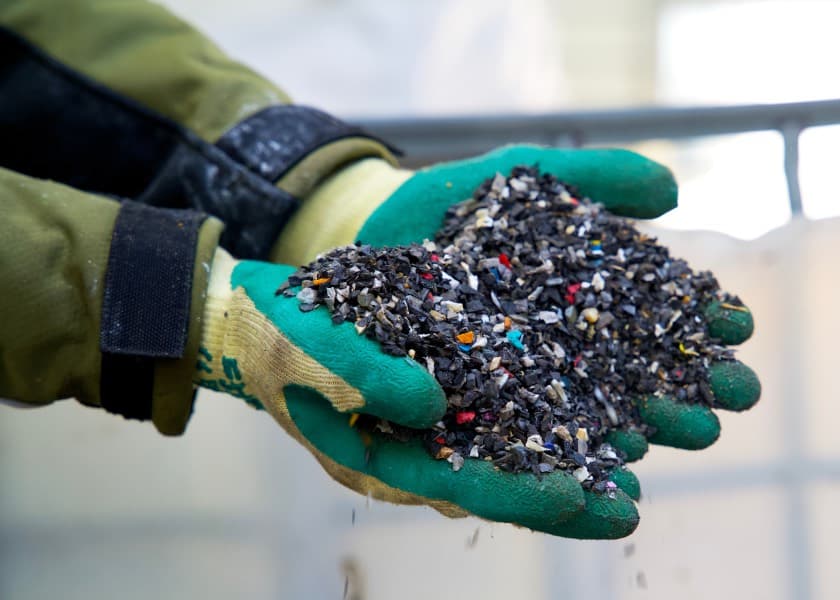
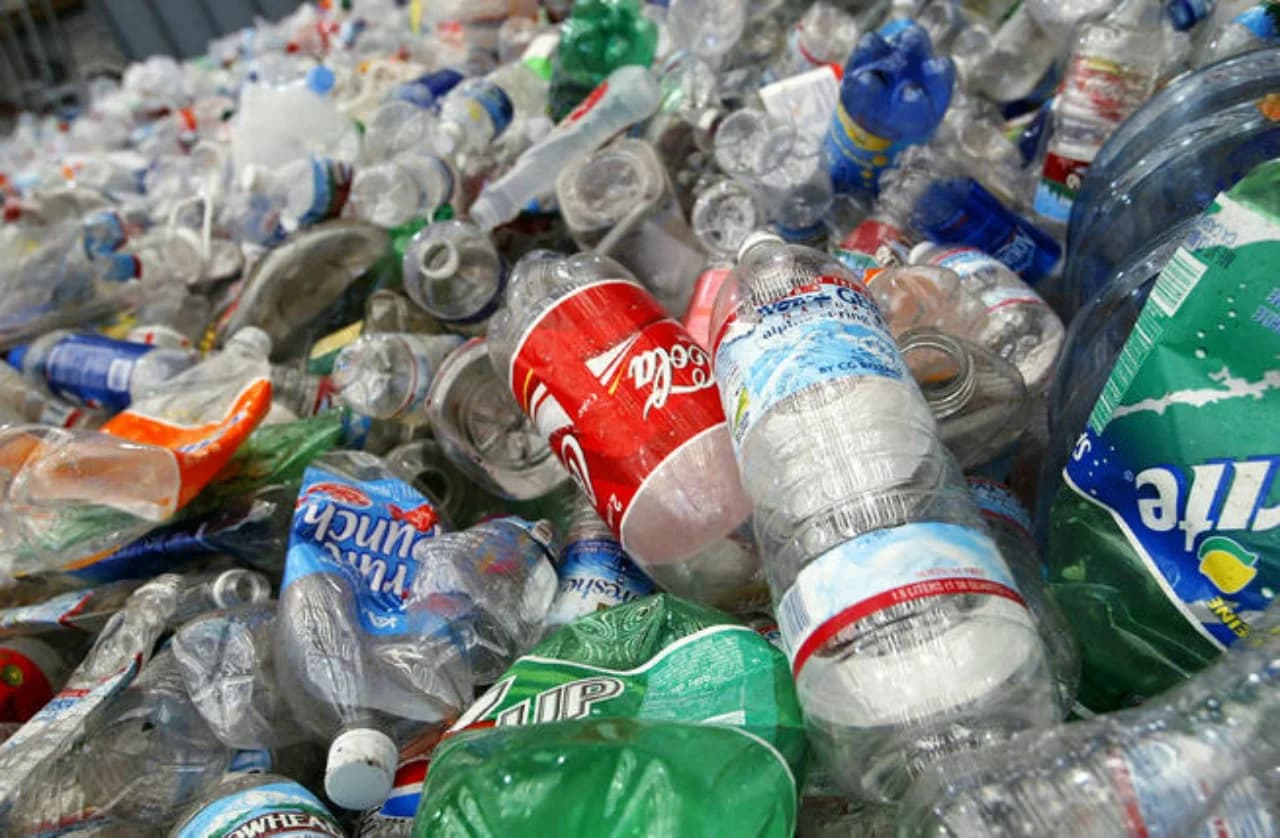
- Post-consumer PP: comes from used packaging, caps and products that are collected, washed and sorted. There is more volume available, but more variation, possible odor and contamination with PE or label residue.
For technical parts, single-source post-industrial material is usually the safer choice. For less demanding products, such as buckets, planters or construction items, well-processed post-consumer material may be enough. Check how your corporate target is defined: some brands track post-consumer recycled content separately from post-industrial, and only one of them may count toward the goal.
Applications: where recycled PP works
| Application | Process | What the material needs |
|---|---|---|
| Pallets and plastic crates | Injection | Impact, stiffness, mid-range MFI |
| Buckets and industrial containers | Injection | Impact copolymer, uniform color |
| Non-visible automotive parts | Injection | Controlled filler, low odor, stable properties |
| Planters, furniture and garden products | Injection | UV stabilization and color |
| Sheet and profiles | Extrusion | Low MFI, few gels |
| Raffia, fiber and strapping | Extrusion | Low MFI and very few contaminants |
| Talc or carbonate compounds | Compounding | Consistent base material between lots |
Pallets are a good closed-loop example: an end-of-life PP pallet can be ground and molded into a new pallet or crate. We explain how in our article on wood and plastic pallet recycling.
Quality criteria to check on every lot
Melt flow index (MFI)
For PP it is measured at 230 °C with a 2.16 kg load. It tells you how easily the material flows: low values suit extrusion, high values suit thin-wall injection. Use the MFI of the resin you run today as your reference. Note that PP degrades by chain scission when reprocessed, so its MFI tends to rise with each pass. Lot-to-lot variation matters as much as the average value.
Density and ash content
Unfilled PP has a density close to 0.90 g/cm³. A higher density signals mineral filler, and an ash test tells you how much. Undeclared filler changes stiffness, part weight and mold shrinkage.
Polyethylene contamination
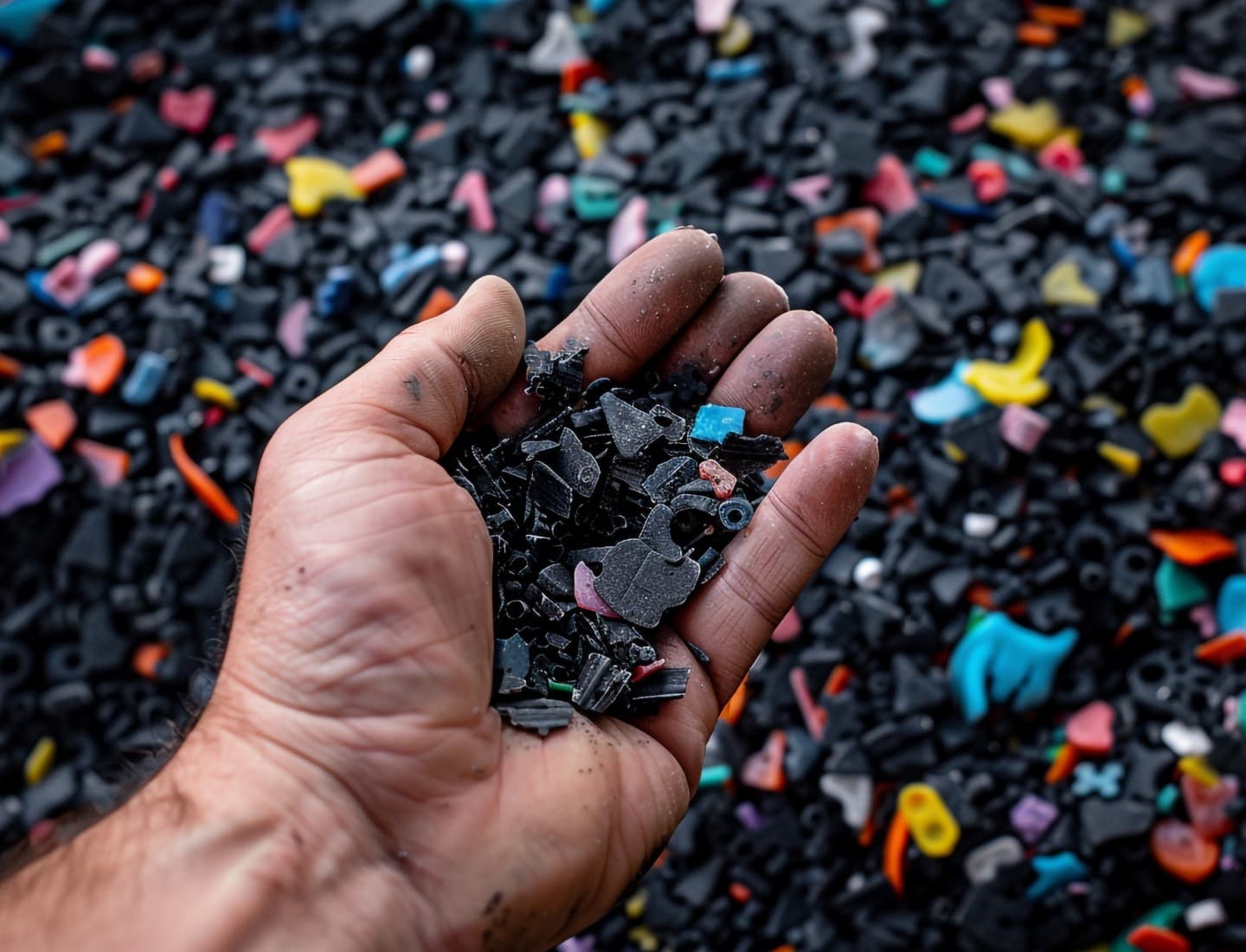
This is the most common issue in post-consumer PP, because caps, containers and labels mix both polyolefins, which are not miscible. High PE content lowers stiffness and can cause delamination. Differential scanning calorimetry (DSC) detects it as an extra melting peak below the PP peak.
Contaminants, gels and black specks
Unmelted particles, paper, metal or foreign resins hurt appearance and can break thin-wall parts or fibers during drawing. Ask what filter mesh was used during pelletizing.
Mechanical properties
Ask for notched impact (Izod or Charpy), flexural modulus and tensile strength, with the test method stated, so you can compare them with your current material.
Odor and color
Odor carried over from detergents, food or oils matters for automotive interiors and consumer goods. Natural PP can be colored to any shade; mixed-color lots usually end up gray or black.
How to qualify a new supplier
- Document your current baseline: MFI, density, impact and color of the resin you use.
- Request a technical data sheet and a certificate of analysis for every lot.
- Ask for a representative production sample, not a lot prepared just for the trial.
- Run a trial and record process window, cycle time, part weight and dimensions.
- Put the parts through your functional tests: drop, load, assembly or whatever applies.
- Start with a low share of recycled material blended with virgin and step it up. Our guide to adding recycled content to production covers this in detail.
- Agree on lot tolerances, such as an MFI range, and on what happens when a lot falls outside them.
A good supplier is not measured by its best lot, but by how closely the tenth lot matches the first. If your corporate supplier quality team uses a formal onboarding process, run the recycled material through it like any other critical input.
When to blend it with virgin PP
Blending recycled with virgin resin is the most common way to add recycled content without putting the part at risk. Virgin resin steadies flow and properties, and in solid colors it helps even out the shade when recycled material varies in tone. Colored grades, such as blue or black virgin polypropylene, are useful in exactly that case; see how they are used in our article on colored virgin polypropylene.
There is no universal ratio. It depends on the part, the variability of the recycled material and what your customer requires, and it is set through testing, not by rule of thumb.
How Zikloa can help
Zikloa takes polypropylene scrap, such as raffia, crates, pallets and molded parts, and its catalog includes polypropylene pallets and blue and black virgin polypropylene. Through our raw material supply service, which covers both recycled and virgin options, we help you put together the mix your process needs. Share your application and reference MFI and we will review the alternatives with you.
- #polypropylene
- #recycled pp
- #quality control
- #injection molding
- #recycled raw materials
Frequently asked questions
Does recycled polypropylene need drying?
PP is not hygroscopic, so it does not absorb moisture the way nylon or PET does. However, washed material or material stored outdoors can carry surface moisture or moisture held in mineral fillers; if you see bubbles or streaks, a short drying cycle usually fixes it.
Can recycled PP be used in food-contact parts?
Only if the material comes from a process specifically validated for that use and meets the applicable regulations. Typical industrial recycled PP is intended for non-food-contact applications.
Is recycled PP suitable for outdoor parts?
Yes, as long as it has enough UV stabilization. Unstabilized PP degrades in sunlight, fades and becomes brittle. Ask the supplier whether the material includes a UV stabilizer, or add one in your formulation.