Recycled content: adding it to production without losing quality
Adding recycled material doesn't have to raise your reject rate. A phased method to pick parts, trial percentages, tune the process and document recycled content.
By Zikloa TeamPublished 5 min read
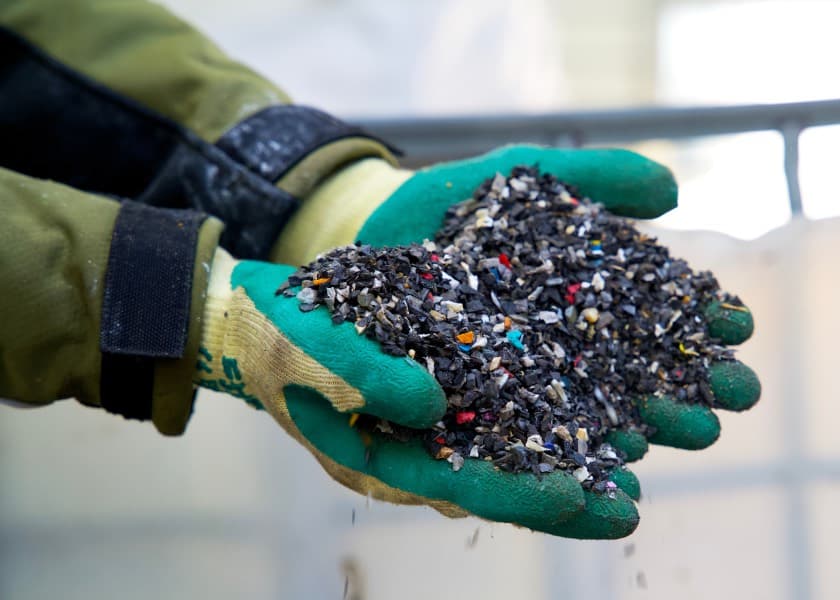
Key takeaway: Adding recycled content without losing quality is a phased project: you pick the right parts, secure a consistent incoming material, start at low percentages and step up only when the data supports it. The goal isn't the highest percentage; it's a repeatable process.
More and more customers expect recycled content in the parts and packaging they buy. For many companies that have nearshored to Mexico, the pressure comes from headquarters: a global commitment is announced, and the Mexican plant is where that commitment meets the press. Quality teams often see it as a risk. It doesn't have to be. With an orderly method you can add recycled material, document it correctly and keep your reject rates under control.
This guide is written for injection molding, extrusion and thermoforming plants, though the logic carries over to other materials.
First, define what counts as recycled content
Before you touch a machine, agree on a definition. ISO 14021, the standard for self-declared environmental claims, distinguishes two types:
- Pre-consumer: material diverted from the waste stream during a manufacturing process. It excludes rework, regrind or scrap reclaimed within the same process that generated it.
- Post-consumer: material generated by households or by commercial, industrial and institutional facilities as end users of a product that can no longer serve its purpose.
The practical consequence: feeding your own runners back into the same press is good practice, but it usually can't be claimed as recycled content. Material from other processes or other plants, and post-consumer material, can count. If your customer or corporate parent uses its own definition, follow it and keep the evidence: invoices, certificates and consumption records by lot.
Choose candidate parts
Not every part is a good place to start. Prioritize those that meet most of these criteria:
- Not structural or safety-critical.
- Black, gray or another dark color.
- Hidden surfaces or no strict cosmetic requirements.
- Wall thicknesses and flow lengths without extreme demands.
- No food contact or medical use.
- Enough volume to make the effort worthwhile.
A simple matrix helps: part criticality on one axis, annual volume on the other. Low-criticality, high-volume parts are your first candidates.
If you're designing a new part, that's the best moment to build in margin: ecodesign principles help a part accept recycled content from day one.
Secure a consistent incoming material
Results depend more on the consistency of the recycled material than on its percentage. Check that it:
- Is the same polymer, in a grade compatible with your current material.
- Has a melt flow index close to your virgin resin.
- Comes in a compatible format: mixing pellets with regrind of very different size causes hopper segregation and erratic dosing.
- Arrives with controlled moisture if the polymer is hygroscopic.
- Has known, constant filler content if it's a reinforced grade.
Ask for a certificate per lot and review the parameters covered in our guide to the recycled plastic data sheet. If the material comes from other plants' scrap, it's worth understanding how injection and extrusion scrap gets recovered.
A phased trial plan
| Phase | What you do | Criterion to move on |
|---|---|---|
| 1. Lab | Measure MFI, moisture, ash and density of the recycled material and the blend | Values within your specification |
| 2. Short run | Produce at a low percentage on a single machine | Defect-free parts within dimensions |
| 3. Steps | Raise the percentage in stages | Scrap rate and cycle time on target at each stage |
| 4. Validation | Functional tests: impact, assembly and aging if relevant | Quality approval and, if needed, customer approval |
| 5. Controlled production | Lots with tightened inspection | Stable metrics for several weeks |
Define the steps before you start, for example in increments of 10 percentage points, and run enough volume at each one for the data to be representative: at least a full shift or a normal lot. If a step fails, go back to the previous one and find the cause before trying again.
Your maximum percentage is the last step that passed every test, not the number theory promises. If you supply a customer with formal material approval, as in automotive, no change reaches production without their sign-off.
The most common process and color adjustments
- Dosing: a gravimetric blender holds the ratio more precisely than a volumetric feeder, especially with regrind.
- Drying: dry the full blend when the polymer is hygroscopic, not just the virgin resin.
- Temperatures and pressures: if the recycled material flows more, you may need lower temperature or pressure to avoid flash; if it flows less, the opposite.
- Color: the base shade of recycled material varies. Adjust masterbatch dosage, agree on a realistic color tolerance with your customer or move to darker shades.
- Additives: stabilizers, impact modifiers or compatibilizers can recover properties when needed.
- Filtration: in extrusion, a screen changer catches contaminants before they reach the product.
Record every adjustment on the part's process sheet. If the recycled lot changes tomorrow, you'll know exactly which parameters you moved and why.
Ongoing quality control
Once in production, control focuses on three points:
- Incoming: review each lot's certificate and test at least MFI and, where relevant, moisture.
- In process: part weight is one of the most sensitive indicators of flow changes; track it along with critical dimensions and appearance.
- Traceability: record which recycled lot went into which production lot and keep retained samples.
Keep a dashboard with actual recycled content percentage, scrap rate and customer claims. It's the evidence your customer or corporate sustainability team will ask for, and the basis for deciding whether to move up a step.
Mistakes that usually drive rejects up
- Jumping straight to a high percentage because another plant uses it. Every part and every incoming material is different.
- Switching recycled suppliers without repeating the trials. A new source is, in practice, a new material.
- Hand-mixing in the hopper. Ratios drift between shifts and operators.
- Skipping drying for the recycled portion because the virgin resin arrives dry. Regrind usually carries more moisture.
- Only testing at the start. Variation shows up in the fifth lot, not in the sample.
- Claiming percentages without evidence. If you can't prove recycled content with records, your customer can't use it in their reporting.
How Zikloa can help
Zikloa buys and collects your plant's scrap and, through our raw material supply service, provides both recycled and virgin material. That lets you close the loop with one supplier in Mexico and keep virgin resin as a backup while you validate your blends. Tell us which parts you want to convert and with which material.
- #recycled content
- #injection molding
- #quality control
- #regrind
- #circular economy
Frequently asked questions
What percentage of recycled content can I use?
There's no universal number: it depends on the polymer, the part and the quality of the recycled material. The practical approach is to step the percentage up and set your maximum at the last level that passed every test.
Does regrind from my own press count as recycled content?
Under the ISO 14021 definition, material reclaimed within the same process that generated it doesn't count as pre-consumer recycled content. Scrap from other processes or other plants can count, and so does post-consumer material.
Do I need to notify my customer before adding recycled material?
If your customer approved a material specification, any change has to go through their approval process. In sectors like automotive, switching materials without authorization can lead to rejected parts and contractual problems.