Aluminum cans: from the bin back to the shelf in 60 days
A used aluminum can may become a new can within weeks. Follow each stage of the loop and learn how to set up can collection that works across shifts at your plant in Mexico.
By Zikloa TeamPublished 5 min read
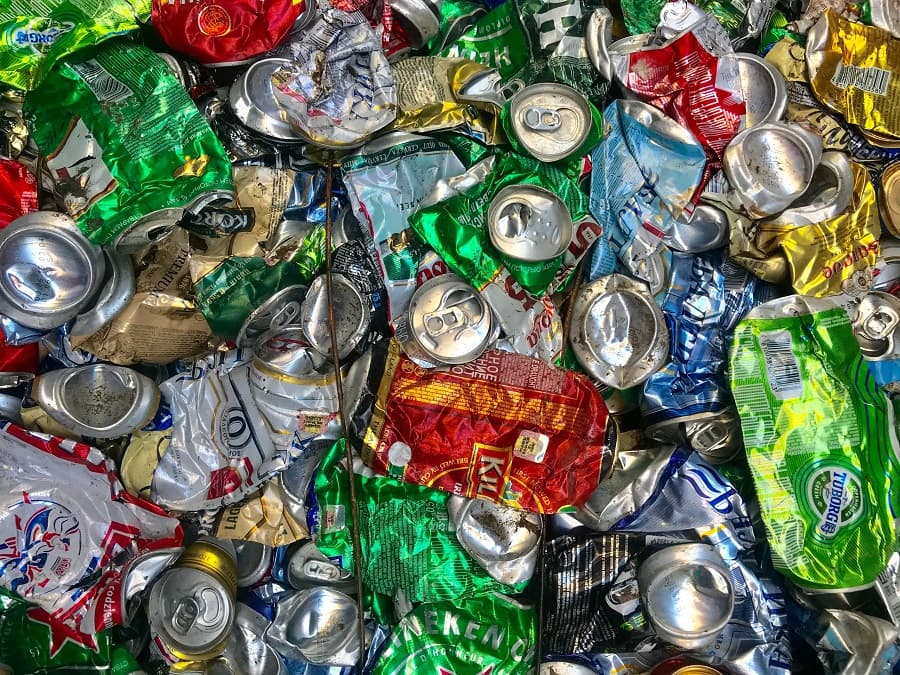
Key takeaway: Under ideal conditions, an aluminum can dropped into a recycling bin can be back on a store shelf as a new can in about 60 days: it is compacted, melted, rolled and formed again. At your plant, the challenge is not technology but collection: empty cans, kept apart from other waste, in enough volume to make pickups efficient.
Aluminum can recycling is one of the few truly closed loops in the circular economy. A used can can become the same product again, without losing quality and with a fraction of the energy needed to make it from new metal. The aluminum industry commonly cites around 60 days for the full trip from bin to shelf.
For plants in Mexico with large workforces, industrial cafeterias, vending areas and multiple shifts, cans are a small waste stream by weight but a very visible one. Employees see them every day, which makes can collection a simple way to show that the recycling program is real. This article explains each stage of the loop and how to organize collection inside your operation.
The life of a can, stage by stage
- Use and disposal. The can is emptied and placed in a dedicated bin.
- Collection and compaction. Cans are gathered, crushed or bagged, and stored until pickup.
- Sorting. At the recycling facility, trash, steel cans and other materials are removed using magnets, eddy current separators and inspection.
- Shredding and decoating. Cans are shredded and heated to strip paint and lacquer before melting.
- Melting and alloy adjustment. The metal is melted and its composition adjusted for can sheet.
- Casting and rolling. It is cast into slabs and rolled into very thin sheet wound into coils.
- Can making. The sheet is cut, drawn, ironed and decorated into new cans.
- Filling and distribution. The can is filled, sealed and sent back to stores.
Is it really 60 days?
The 60-day figure describes an ideal scenario where every stage flows without delays. In practice, the real timeline depends on how many weeks cans sit in your storage area, how often they are picked up and how much inventory each link in the chain holds.
What you control is the first stage. A disorganized collection setup can hold cans for months, contaminate them or send them to landfill. A well-designed one delivers them clean and on time.
Pickup frequency is the lever you control most directly. If can volume on its own is too small to justify frequent pickups, combine cans with cardboard, PET or other recyclables on the same truck, so they leave your site regularly instead of sitting in a corner of the warehouse.
Why cans are such a valuable stream
- They are aluminum, and recycling aluminum saves around 95% of the energy required to produce it from bauxite. We break this down in why aluminum recycling saves so much energy.
- They are uniform and easy to recognize, so employees can sort them without complex training.
- Body and lid use different alloys, but the industry is set up to remelt them together and adjust the composition.
- They weigh very little, so their value lies in accumulated volume and cleanliness, not in each individual can.
Where cans show up in a manufacturing site
| Source | Expected volume | Contamination risk | Recommendation |
|---|---|---|---|
| Cafeteria (comedor) | High | Leftover drinks, mixed with trash | Dedicated bin by the exit |
| Vending areas | Medium | Mixed with PET bottles | Twin can/PET bin |
| Offices and meeting rooms | Low | Mixed with cups and paper | Shared station with clear signs |
| Company events | Occasional peaks | Mixed with every kind of waste | Temporary stations with an owner |
| Food service contractor | High | Depends on their practices | Include collection in their contract |
Many plants in Mexico outsource cafeteria service. If yours does, make can and PET separation a written requirement in the contractor's scope rather than an informal request.
Setting up can collection that works across shifts
- Use bins with round openings sized for a can, so plates, napkins and bags cannot go in.
- Use photos on signs, in Spanish and English. A picture of what goes in and what does not works for every shift and every reading level.
- Separate steel cans. A magnet mounted next to the station lets cleaning staff check quickly.
- Ask people to empty cans first. A nearby drain or sink helps. Liquids attract pests and add weight that is not aluminum.
- Crush or bag cans in a dry, covered area away from organic waste.
- Record the weight of every pickup to track program performance.
- Train cleaning and cafeteria staff, who do most of the actual sorting. Our article on employee recycling training has practical ideas.
For placing and designing the stations themselves, see our guide to source separation and in-plant recycling stations.
How to tell whether your can program is working
A can collection program can be evaluated with a handful of metrics, as long as you record them from the first month:
- Kilograms collected per month. The baseline figure. Compare month over month rather than against an arbitrary target.
- Estimated capture rate. If your cafeteria contractor or vending operator can tell you how many cans they sell, you can estimate what share comes back to the recycling bin. Weigh a sample of empty cans to convert kilograms into units.
- Contamination level. A weekly visual check of the bins using a simple scale (clean, some trash, heavily contaminated) shows whether signage is working.
- Rejections or deductions on each pickup.
A low capture rate usually points to bin placement or to cleaning crews emptying everything into the same bag. High contamination points to signage or the shape of the bin opening. Share results with employees, for example on a screen near the cafeteria; seeing the kilograms add up reinforces the habit and gives your corporate sustainability team a tangible metric.
Common mistakes that lower the value of cans
- Cans with liquid inside, which add weight, dirty the storage area and can be rejected.
- Cigarette butts, straws and napkins stuffed inside.
- Mixing with PET bottles, glass or multilayer cartons.
- General trash bags with a few cans in them.
- Storing cans outdoors for months, which soils the material and complicates handling.
How Zikloa can help
Zikloa recycles aluminum cans along with cardboard, paper, plastics and other metals, so cans can be added to a comprehensive recycling program instead of requiring a separate service. We weigh every pickup on certified scales and provide the documentation you need to track and report your program.
If you want to add can collection to your plant's recycling program, contact us to plan the pickups.
- #aluminum cans
- #aluminum
- #workplace recycling
- #circular economy
Frequently asked questions
Should employees crush cans before recycling them?
Crushing saves storage and transport space as long as cans are empty and not mixed with other materials. High-volume sites may justify a compactor; smaller sites can simply bag cans in clearly labeled containers. Ask your recycler which format it prefers.
How can staff tell aluminum cans from steel cans?
With a magnet. Steel cans, common for canned food, stick to it; aluminum beverage cans do not. Keeping them apart prevents the lot from being graded as mixed metal.
Do recycled cans really become new cans?
Yes, it is one of the most direct loops in recycling. Clean, well-sorted cans can be remelted into can sheet again, and part of the metal also goes into other aluminum products.