Certified scales: why accurate weighing protects your revenue
When you sell scrap, weight matters as much as price. Learn what a certified scale means in Mexico, how to read a scale ticket and how to catch discrepancies early.
By Zikloa TeamPublished 5 min read
Key takeaway: When you sell scrap, you are paid price times weight, so a scale error costs as much as a bad quote. A certified scale, calibrated with traceability and verified when used for trade, gives you a number you can trust. Your part is understanding the ticket, reconciling weights with your buyer and documenting every shipment.
Companies spend a lot of time negotiating price per kilogram and very little checking how their scrap is weighed. That is an expensive blind spot. Certified scrap scales are what turn the material leaving your plant into a number you can rely on for invoicing, inventory reconciliation, internal audits and ESG reporting.
If your team is used to US practice, where scales used for trade are "legal for trade," type-approved and inspected by state or local weights-and-measures officials, Mexico follows its own framework. This article explains what certification means here, which scales are used in scrap buying, how to read a ticket and what routine to follow so every shipment is weighed without doubts.
Why weight is half of your revenue
Revenue from each shipment is essentially price times net weight, minus agreed deductions. Price is negotiated; weight is measured. If the measurement is off, the negotiation does not count for much.
A 1% error on every load means giving away one kilogram out of every hundred. On a single shipment it looks trivial. Repeated across every truck for a year, on large volumes of ferrous scrap or on high-value metals such as copper, it becomes significant. And because small errors are invisible to the naked eye, they can go unnoticed for months, which is exactly the kind of finding internal auditors flag.
What "certified" means in Mexico
"Certified" is commonly used to describe a scale whose accuracy is backed by documentation. In practice, check three things:
- Traceable calibration. A laboratory tests the scale against reference weights and issues a certificate showing the date, errors found and measurement uncertainty. In Mexico, calibration laboratories are accredited by the Entidad Mexicana de Acreditación (ema).
- Verification. Measuring instruments used in commercial transactions are subject to verification under Mexican metrology rules, and Profeco, the federal consumer protection agency, takes part in that oversight. Requirements change over time, so confirm the current ones with the authority or a metrology specialist.
- Maintenance. Platform cleaning, load cell checks, leveling and service records.
Before signing with a buyer, ask for the current calibration certificate, evidence of verification where applicable, the scale's capacity and resolution, and a sample ticket.
Scale types used in scrap buying
| Type | Typical use | What to watch |
|---|---|---|
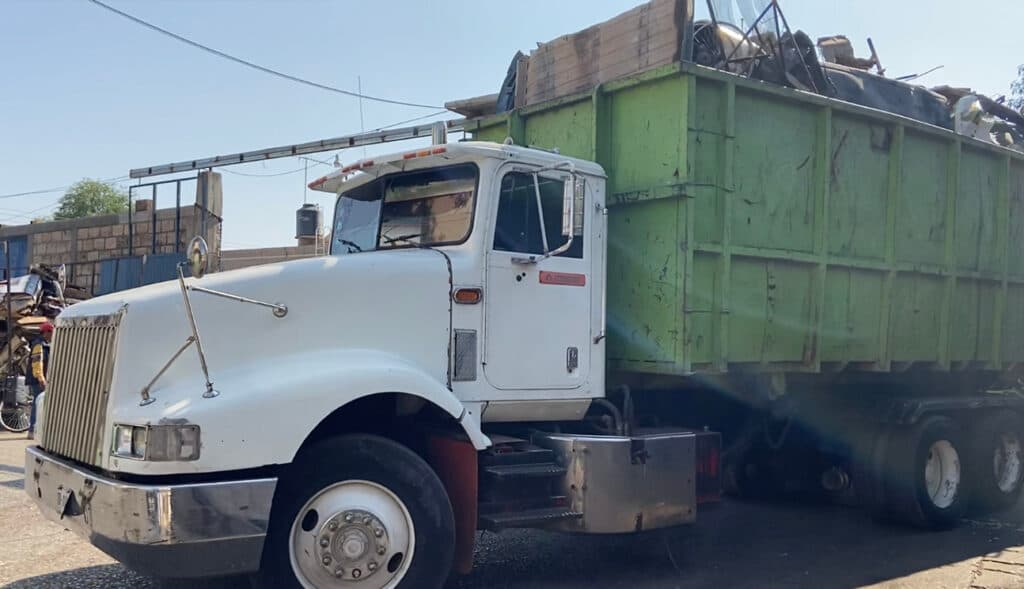
| Truck scale | Full loads, roll-off containers, tractor-trailers | Whole vehicle on the platform; tare from the same vehicle |
| Platform scale | Mid-size lots, drums, bulk bags, pallets | Adequate capacity, level and clean platform |
| Floor or bench scale | Small quantities of high-value non-ferrous metals | Fine resolution suited to the material's value |
Resolution matters. Weighing a few kilograms of copper on a scale designed for tractor-trailers produces a number of limited use, even if the scale is perfectly calibrated. Remember too that Mexican tickets report kilograms; convert carefully if your corporate system tracks pounds.
How to read a scale ticket
A complete ticket should show:
- A unique ticket number, date and time.
- Vehicle or container identification.
- Gross, tare and net weight.
- Material or category.
- The operator's name and, ideally, the signature of the person handing over the load.
Deductions for moisture, contamination or grading should appear as separate lines with their criteria. If a ticket simply shows a lower net weight with no explanation, you cannot tell a scale error from a deduction.
Also ask for tickets in a format you can archive digitally, such as a PDF or a legible photo, with the ticket number referenced on the CFDI invoice. That way any auditor can trace a shipment from the scale to the payment.
Step by step: good weighing practice for every shipment
- Confirm the scale reads zero before each weighing.
- Make sure the whole vehicle is on the platform, stopped and not touching ramps or bumpers.
- Take tare from the same vehicle on the same day. Fuel, tarps and accessories change its weight.
- Keep conditions identical between gross and tare: same chains, tarps and container.
- Avoid loading wet material and note rain on the ticket if it occurs.
- Photograph the load and keep the signed ticket.
- File the ticket with the invoice and the transport document. Our guide to waste manifests and traceability explains how to organize that record.
Red flags in scrap weighing
None of these proves an error on its own, but each one justifies a closer look:
- Handwritten tickets with no ticket number, or without gross and tare weights.
- "Stored" tare: a standard value for the vehicle instead of weighing it empty that same day.
- Reluctance to show a calibration certificate, or certificates that have expired.
- Weighings done out of sight of your staff, with no photo or signature.
- Weights always rounded down, or differences that always favor the same party.
- Deductions applied directly to the weight with no line item explaining them.
- Pressure not to weigh at origin, or to sign blank tickets.
If you spot any of these, there is no need to accuse anyone. Ask for the procedure in writing, have someone from your team attend the next few weighings and compare against an independent scale. For plants that report to a corporate parent, documenting those checks also gives auditors evidence that scrap revenue is controlled.
Reconciling weights with your buyer
- Weigh at origin. Your own calibrated scale gives you a comparison point for every shipment.
- Agree on a written tolerance and what happens when it is exceeded.
- Keep a reconciliation log with date, ticket number, origin weight, destination weight, difference and action taken.
- Look for patterns, not just incidents. Differences that always go the same direction point to a method or equipment problem.
- Run random control weighings at an independent scale when in doubt.
Reliable weights also feed your reporting. The recycling certificate you receive is only as solid as the weight behind it, and the final value of each load depends on the factors we cover in how scrap metal prices are set in Mexico.
How Zikloa can help
Zikloa weighs every transaction on certified scales and provides a ticket and documentation for each shipment as part of our scrap metal buying and selling service. If you have your own scale, you can compare your records against our tickets on every pickup and apply the reconciliation routine above.
To review how your scrap is weighed today or to request a quote, get in touch with our team.
- #scales
- #scrap metal
- #weighing
- #traceability
Frequently asked questions
What is the difference between calibrating and verifying a scale in Mexico?
Calibration compares the scale against reference standards and documents its error, usually performed by an accredited laboratory. Verification confirms that an instrument used in commercial transactions meets applicable metrology rules. They complement each other; one does not replace the other.
What should we do if our scale and the buyer's scale disagree?
First confirm both weighings followed the same method: same vehicle, same load and the same way of taking tare. If the gap stays above the agreed tolerance, request a joint review and current calibration certificates for both scales.
Do we need our own scale to sell scrap?
It is not mandatory, but a calibrated platform scale lets you record what leaves your plant and spot discrepancies. For full truckloads, you can agree on control weighings at an independent truck scale.