Grapple cranes: when you need one for bulk scrap
A truck-mounted grapple crane clears heavy, irregular scrap piled on the ground. Learn when it makes sense, how it compares with other loading methods and how to prep your site.
By Zikloa TeamPublished 5 min read
Key takeaway: A grapple crane makes sense when you have heavy, irregular or loose scrap piled on the ground that cannot be loaded safely by hand or with a forklift. It keeps workers away from sharp edges and speeds up loading, but it needs firm ground for the truck's outriggers and a work zone clear of people and overhead lines.
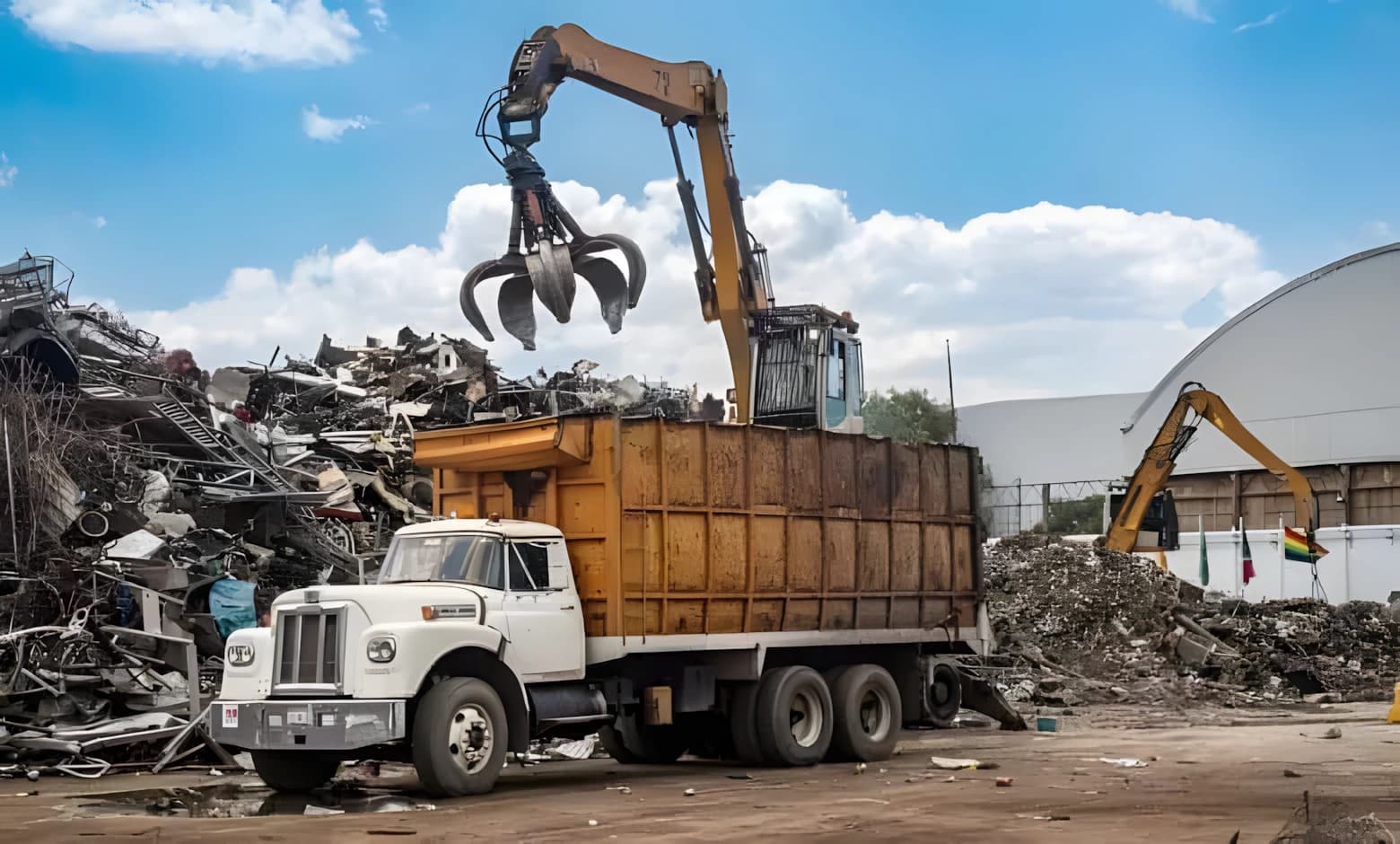
A grapple crane for scrap is a truck fitted with a hydraulic knuckle-boom crane that carries a multi-tine grapple, often called an orange-peel grapple, at the tip. The operator opens it over the pile, closes it and drops the load into the truck bed or a container. It is the machine you see in scrap yards moving trim, beams and structural pieces as if they weighed nothing.
For manufacturers in Mexico, especially those retooling lines, relocating equipment or ramping up new nearshoring capacity, the question is not whether a grapple crane is useful. It is when it beats a roll-off container or forklift loading. This guide helps you decide and get your yard ready for a fast, safe job.
What a grapple crane is and how it works
The setup combines three components:
- A cargo truck with an open bed to receive the material.
- A hydraulic knuckle-boom crane mounted on the chassis, with outriggers that are deployed onto the ground before lifting.
- The grapple, whose tines close around the load. Its shape lets it hold irregular pieces that would be awkward to rig with slings or chains.
The operator works from a position with a clear view of the pile and the bed. Because the boom has reach, the truck does not need to sit right next to the material. It can park on solid ground and pick the load from a distance, always within the equipment's rated capacity.
Materials best handled with a grapple
Grapples excel with heavy, bulky, irregular material. Typical cases include:
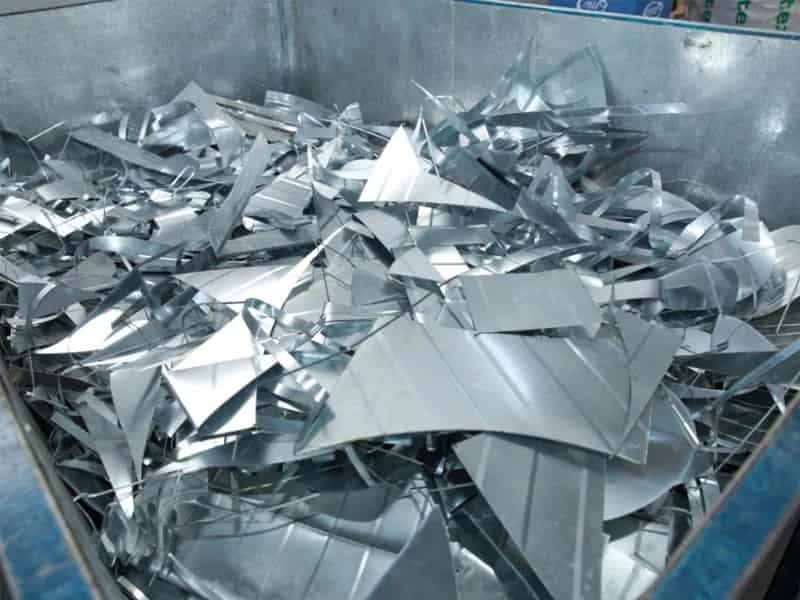
- Bulk ferrous scrap: sheet metal trim, beams and profiles, rebar, castings and stamping skeletons.
- Dismantled structures and equipment: racks, conveyors, machine bases and steel structures already cut into manageable sections.
- Clean-out piles: heaps that built up over months in a corner of the yard, with pieces of every size.
- Bulky non-ferrous scrap, such as aluminum extrusions, when the volume justifies the job.
Separate ferrous from non-ferrous metals before loading, because mixing them in one load lowers the value of both. If you need a refresher, see our guide to ferrous vs. non-ferrous scrap.
A grapple is not the right tool for fine or very small material, such as metal fines or tiny parts, which slip between the tines. Nor is it suited to materials that crumble when squeezed.
Grapple crane vs. roll-off vs. forklift
Each method has its place. Use this comparison to choose:
| Method | Best for | Advantages | Limitations |
|---|---|---|---|
| Grapple crane | Heavy, irregular material piled on the ground | Fast loading, no hand contact with sharp scrap, reach over obstacles | Needs firm ground for outriggers and no overhead lines in the swing area |
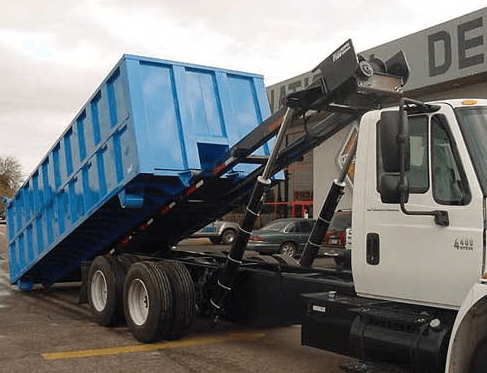
| Roll-off container | Continuous generation your team deposits over time | Doubles as staging area; swapped full for empty | Needs a straight approach and overhead clearance; hand-loading heavy parts is risky |
| Forklift with cage or bin | Material already on pallets, in cages or bins | Uses equipment you already own | Slow with loose scrap; risk of spills or sliding parts |
| Manual loading | Small volumes of light pieces | No equipment needed | Slow, with laceration and strain risks; not advisable for heavy metal |
Many plants combine methods: roll-off containers for daily generation and a grapple crane for clean-outs, decommissioning projects or material that will not fit in a container.
Signs you need a grapple crane
If any of these sound familiar, the service is worth a look:
- A scrap pile on the ground has grown faster than planned.
- You are decommissioning machinery, racking, structures or an entire line.
- Pieces are too long, heavy or sharp to load into a container by hand.
- Workers are improvising by pushing scrap with forklift tines.
- The material sits where a roll-off truck cannot maneuver, but a truck can park nearby.
- You need to free up space quickly for construction, an audit or new equipment arriving from abroad.
How to prepare your yard
Good preparation shortens the job and, above all, reduces risk. Check these points before the service date:
- Ground for outriggers: firm, with no manholes, drains or recent fill where the truck's legs will rest.
- No overhead power lines within the boom's swing area. If there are any, tell the provider before scheduling. Many corporate EHS standards set minimum clearances; apply the stricter of your internal rule and local requirements.
- Concentrated material in one spot, within the crane's reach. Ask the provider for the maximum working radius of their equipment.
- Material sorted by type, with no trash, wood or plastic mixed in.
- No sealed containers, tanks, gas cylinders, batteries or vessels with liquids in the pile. They can burst, ignite or leak when squeezed.
- A marked exclusion zone with tape or cones, and one person from your plant responsible for keeping everyone else out.
For a detailed look at controls, read our guide to scrap yard and loading safety.
Questions to ask your provider before booking
Clarifying these points up front avoids surprises on the day of the job:
- What reach and capacity does the crane have, and how much space does it need to set up?
- How and where is the material weighed? Do you get a scale ticket for each load?
- Will the material be purchased, will the service be billed, or both? How is pricing set?
- What paperwork will you receive when the job is done, and is it enough for your corporate waste records?
- Can the job be combined with containers for ongoing generation?
- What site-access requirements does the crew meet (safety induction, PPE, documentation)?
How Zikloa can help
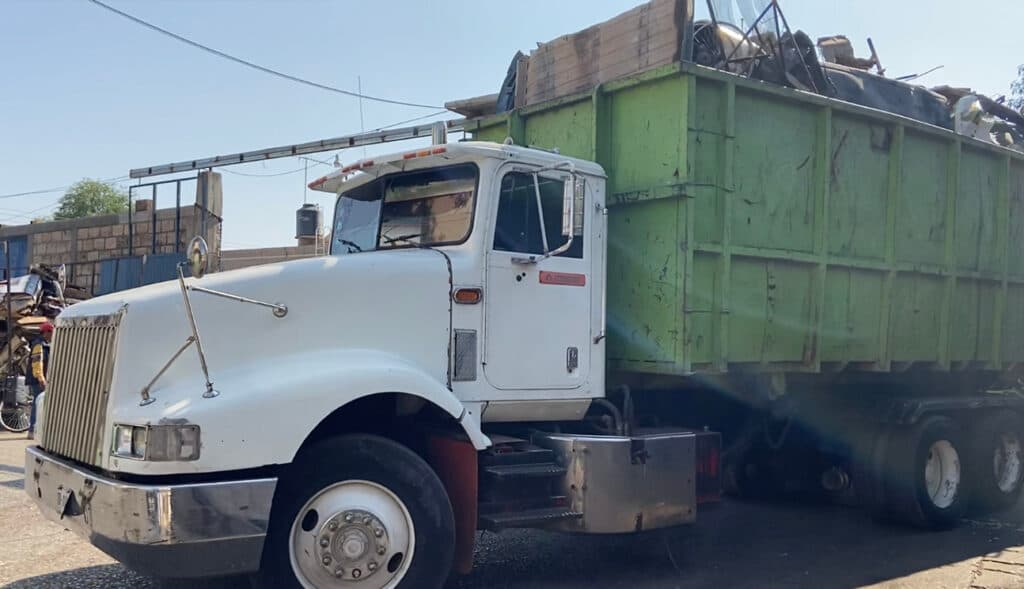
Zikloa operates a grapple crane for bulk material and roll-off trucks with 15, 20 and 30 m³ containers, so we can handle both a one-time clean-out and your plant's day-to-day generation. Material is weighed on certified scales.
We also buy ferrous and non-ferrous scrap, which means a pile that is in the way can turn into revenue. Learn more about our scrap metal buying and selling service or tell us what material you have and how much to get a quote.
- #grapple crane
- #bulk scrap
- #ferrous scrap
- #logistics
Frequently asked questions
What is an orange-peel grapple?
It is a multi-tine attachment, shaped like a claw, that closes around material to lift it. Mounted on a crane boom, it grabs irregular parts and loose scrap without rigging each piece with slings.
Is a grapple crane useful for cardboard or plastic?
It can move bales or bulky loads, but its real advantage is heavy, irregular material such as ferrous scrap or cut-up structures. For cardboard and plastic, a roll-off container or baled shipments are usually more efficient.
How long does a grapple crane load take?
It depends on volume, piece size and how concentrated and accessible the material is. Having the pile in one spot, sorted by type and with nothing in the way is what shortens the job the most.